
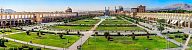
The palaces of Iran are architectural monuments reflecting the country's centuries-old history and cultural heritage. They demonstrate the evolution of styles from the ancient Persian era to the Qajar period, combining oriental luxury with fine artistic decoration.
The most famous is the Golestan Palace in Tehran, a UNESCO World Heritage Site. The palaces of Iran during the Qajar era are distinguished by exquisite tilework with geometric and floral patterns, mirrored halls, and richly decorated facades. Golestan served as the official residence of the shahs and still amazes with the complexity of its decoration and the scale of its compositions.
In Isfahan, the Ali Qapu Palace, built in the 16th-17th centuries under the Safavids, is a striking sight. Its six-story silhouette and wide balconies offer views of Imam Square. The interiors are decorated with wood carvings and paintings, demonstrating the high level of skill of Iranian artisans.
Equally remarkable is the Chehel Sotoun ("Forty Columns") Palace, also located in Isfahan. Its central hall is framed by 20 slender wooden columns, which, when reflected in a pond, create the illusion of forty supports. The frescoes on the walls depict battles and court ceremonies, preserving the historical memory of the era.
Iran's palaces are more than just architectural masterpieces—they serve as museums displaying antique furniture, miniatures, and objects of courtly life. Visiting these monuments allows one to gain a deeper understanding of Iran's aesthetic ideals and political history, immerse oneself in the atmosphere of bygone eras, and appreciate the skill of ancient architects.


- GUIDED GROUP TOUR

Guided group tour package
Tehran - Shiraz - Persepolis - Yazd - Isfahan - Abyaneh - Kashan
Tour start dates:
26.02.2026 - 04.03.2026
08.03.2026 - 15.03.2026
05.04.2026 - 12.04.2026
19.04.2026 - 26.04.2026
03.05.2026 - 10.05.2026
17.05.2026 - 24.05.2026
SGL € 750 per person
DBL € 650 per person
- GUIDED GROUP TOUR

Guided group tour pacakge
Tehran - Shiraz - Persepolis - Yazd - Isfahan - Abyaneh - Kashan - Qeshm Island - Hormuz Island - Hengam Island - Tehran
Tour start dates:
26.02.2026 - 07.03.2026
08.03.2026 - 19.03.2026
05.04.2026 - 16.04.2026
19.04.2026 - 30.04.2026
03.05.2026 - 14.05.2026
17.05.2026 - 28.05.2026
SNG € 1 200 per person
DBL € 1 000 per person