
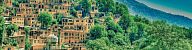
The provinces of Iran comprise 31 administrative units, each with its own unique geography, economy, and cultural heritage. Their diversity reflects the country's diversity: from mountainous regions to coastal zones and deserts.
Iranian provinces vary in their level of development and specialization. Tehran, the capital province, is the economic and political center, home to key institutions and businesses. Isfahan is renowned for its historical monuments (including Imam Square) and its developed industry, producing steel, chemicals, and textiles. Fars, the birthplace of Persian civilization, contains the ancient ruins of Persepolis and Pasargadae, attracting tourists and explorers.
In the north, the provinces of Gilan and Mazandaran boast green landscapes and agriculture: rice, tea, and citrus are grown here, while the Caspian coast offers beach holidays. Khuzestan in the southwest is a key oil-producing region, with large fields and port infrastructure. Sistan and Baluchestan in the southeast border Pakistan and Afghanistan, characterized by an arid climate and the distinctive culture of the local peoples.
Iranian provinces also play a role in preserving natural heritage. East Azerbaijan is home to Lake Urmia and national parks, while Kerman boasts the UNESCO-listed Lut Desert. Each province has its own dialects, culinary traditions, and crafts: for example, silk is made in Yazd, and ceramics are made in Khorasan.

Golestan Province
All about Golestan Province, the "Land of Flowers" on the southeastern coast of the Caspian Sea.

Mazandaran Province
All about Mazandaran Province, the “Land of Giants” between the Caspian Sea and snowy Damavand.

Gilan Province
All about Gilan Province, Iran's "Northern Gate" on the southwestern coast of the Caspian Sea.


- GUIDED GROUP TOUR

Guided group tour package
Tehran - Shiraz - Persepolis - Yazd - Isfahan - Abyaneh - Kashan
Tour start dates:
26.02.2026 - 04.03.2026
08.03.2026 - 15.03.2026
05.04.2026 - 12.04.2026
19.04.2026 - 26.04.2026
03.05.2026 - 10.05.2026
17.05.2026 - 24.05.2026
SGL € 750 per person
DBL € 650 per person
- GUIDED GROUP TOUR

Guided group tour pacakge
Tehran - Shiraz - Persepolis - Yazd - Isfahan - Abyaneh - Kashan - Qeshm Island - Hormuz Island - Hengam Island - Tehran
Tour start dates:
26.02.2026 - 07.03.2026
08.03.2026 - 19.03.2026
05.04.2026 - 16.04.2026
19.04.2026 - 30.04.2026
03.05.2026 - 14.05.2026
17.05.2026 - 28.05.2026
SNG € 1 200 per person
DBL € 1 000 per person