
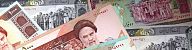
The currency of Iran is the Iranian rial (IRR). Although the term "toman" is often used in everyday life, the toman is not an official currency, but a unit of account: 1 toman equals 10 rials. This simplification makes it easier to handle large sums in everyday transactions.
Iranian money is issued in banknotes in denominations ranging from 100,000 to 1,000,000 rials. Coins are rarely used due to their low purchasing power. Banknotes feature portraits of historical figures, architectural monuments, and symbols of the country's culture. The Central Bank of Iran controls the issuance.
The Iranian exchange rate is extremely unstable. It is affected by sanctions, oil prices, domestic inflation, and restrictions on international payments. There are several exchange rates: the official one (set by the Central Bank), the market rate (on the black market), and the border rate (in free trade zones). The difference between them can reach tens of percent.
For example, the official rial to US dollar exchange rate is regularly revised, but the real market rate is often several times lower. Because of this, citizens and businesses are forced to seek alternative conversion methods: using cash, digital platforms, or barter.
In recent years, the authorities have been attempting to stabilize the currency: introducing exchange restrictions, regulating reserves, and experimenting with alternative payment mechanisms. However, high inflation continues to devalue the rial, reducing the purchasing power of Iranian currency and complicating the import of goods. For businesses, this means constantly monitoring the Iranian exchange rate and choosing reliable payment methods.

Sasanian Coinage
Silver drahms, gold denars, and royal crowns — key artifacts revealing Iran’s 3rd–7th century monetary system and royal iconography.


- GUIDED GROUP TOUR

Guided group tour package
Tehran - Shiraz - Persepolis - Yazd - Isfahan - Abyaneh - Kashan
Tour start dates:
26.02.2026 - 04.03.2026
08.03.2026 - 15.03.2026
05.04.2026 - 12.04.2026
19.04.2026 - 26.04.2026
03.05.2026 - 10.05.2026
17.05.2026 - 24.05.2026
SGL € 750 per person
DBL € 650 per person
- GUIDED GROUP TOUR

Guided group tour pacakge
Tehran - Shiraz - Persepolis - Yazd - Isfahan - Abyaneh - Kashan - Qeshm Island - Hormuz Island - Hengam Island - Tehran
Tour start dates:
26.02.2026 - 07.03.2026
08.03.2026 - 19.03.2026
05.04.2026 - 16.04.2026
19.04.2026 - 30.04.2026
03.05.2026 - 14.05.2026
17.05.2026 - 28.05.2026
SNG € 1 200 per person
DBL € 1 000 per person