
Reasons to go on a group tour in Iran
- to visit cultural heritage and natural sites included on the UNESCO World Heritage list;
- to explore the remains of great empires and civilisations, and to discover artefacts from the periods of their rise and fall;
- to observe the transformation of the art of a conquered people, as new and previously unknown motifs and methods of art are infused and integrated;
- to find out how and why events of the past centuries still resonant in the current news of the international media;
- to feel what's the life is in one of the most mysterious countries in the world.
On the group tour to Iran we will
- visit the royal palace complexes of the Persian Monarchs of the Achaemenid dynasty (705-330 BC), Safavid dynasty (1501-1736 AD), Zand dynasty (1753-1794 AD) and Qajar dynasty (1795-1925 AD);
- walk the path of kings and conquerors through the ruins of the once great Persepolis, as destroyed by Alexander the Great;
- discover how the doctrine of Zoroastrianism about good thoughts, words, and deeds, shaped the principles of governance in the multicultural Achaemenid Empire;
- stand in awe at the beauty and magnitude of the tombs of Cyrus the Great, Hafez
- find out which elements of European architecture, adopted during the reign of the Qajar dynasty, harmoniously fit into the interiors of mosques and houses of the Iranian nobility;
- gaze upon the majestic night sky on the edge of the Dasht-e Kavir desert;
Arrival in Tehran, sightseeing tour of the sights and evening flight to Shiraz
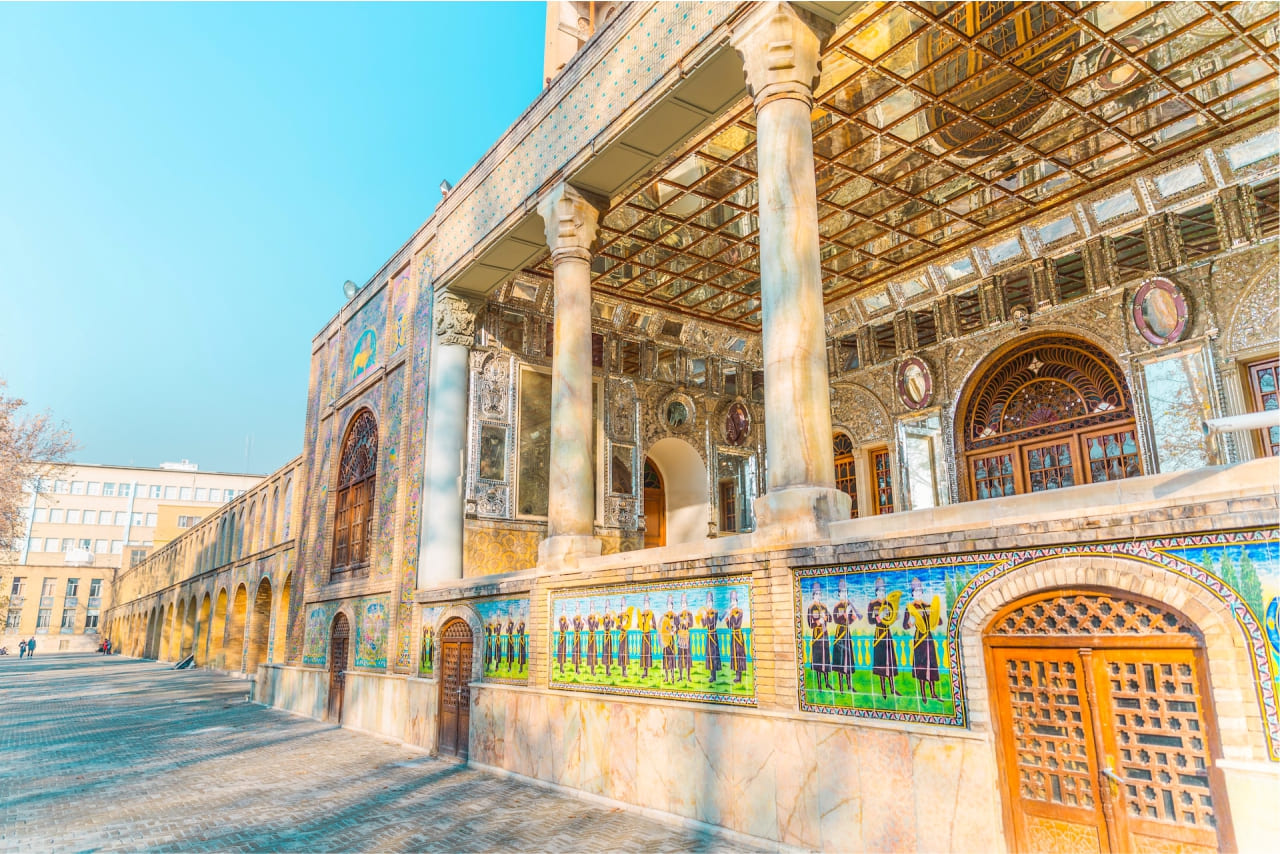
Your guide will meet you at the airport and our journey through Iran will begin with a visit to the UNESCO heritage site, the Golestan Museum.
The Golestan Palace complex will allow you to journey back into the days of the Qajar Dynasty, whose kings reigned during the 18th and 19th centuries. Here you will encounter a refreshing and invigorating blend of Eastern and Western artistic and architectural influences as the traditional design elements of the region such as badgir windcatchers and iwans covered with brightly painted motifs unexpectedly intertwine with European neo-classical architectural features, reflecting the trend for everything being European among the reining elite of the Qajar dynasty.
This tour is adapted for Aeroflot flights Moscow - Tehran - Moscow.
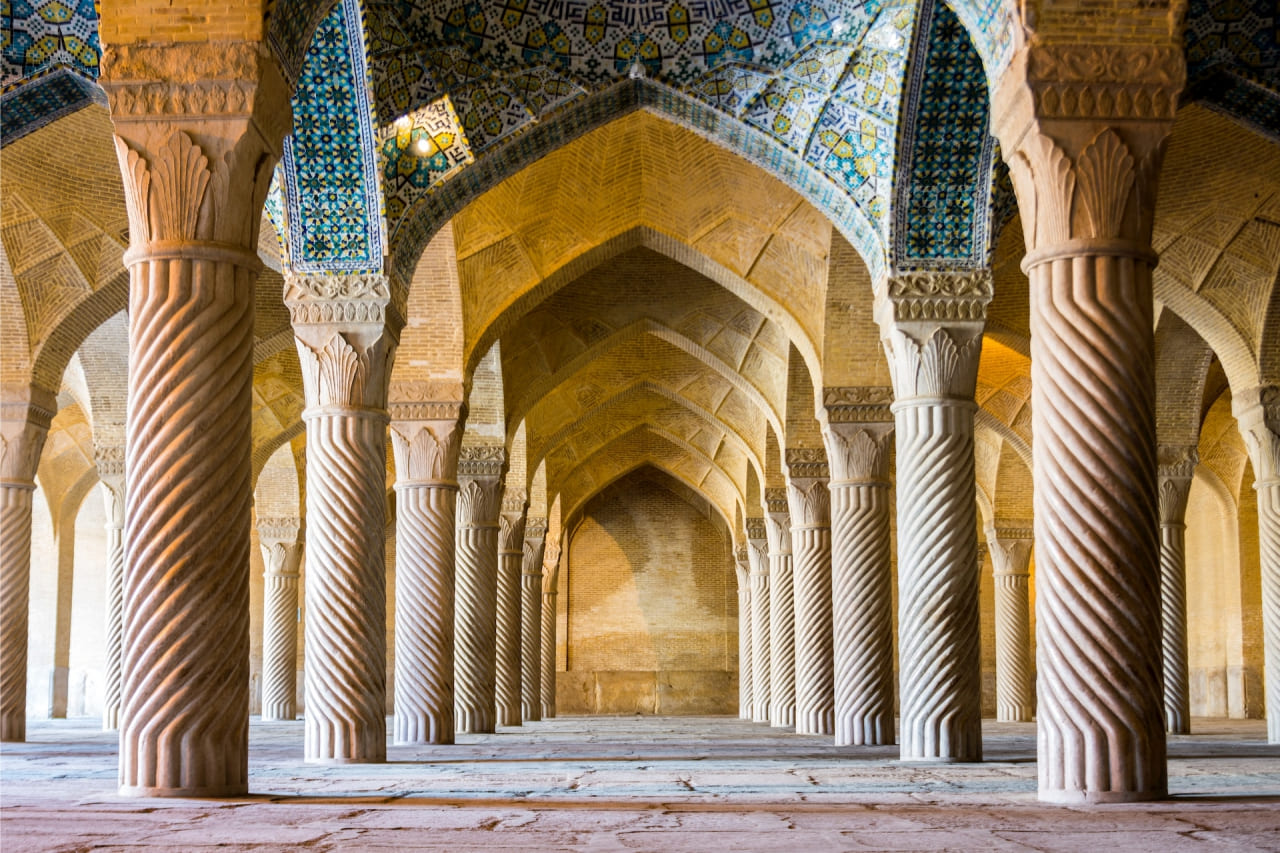
The masterpieces of Persian architecture and engineering.
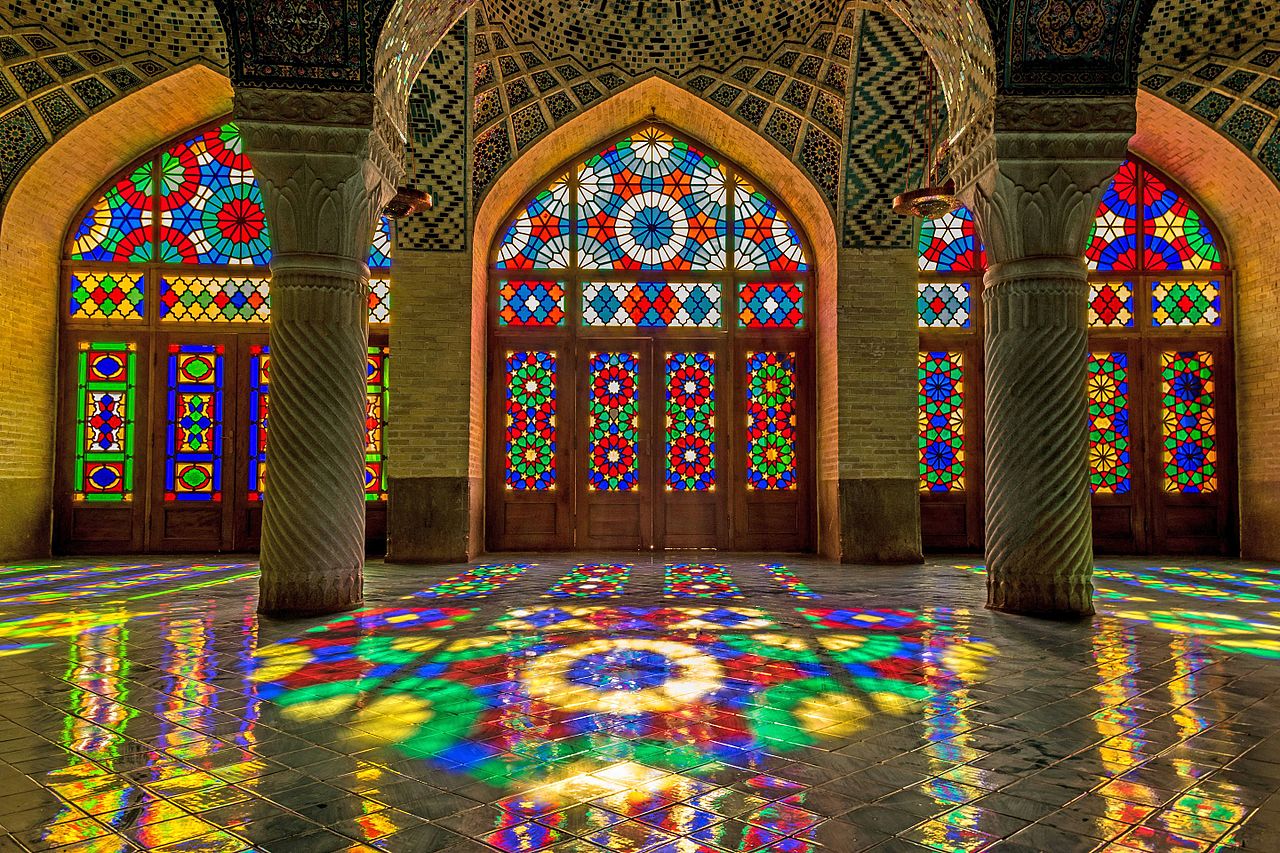
The photo shoot at Nasir al-Mulk Mosque.
The provincial capital of Fars, Shiraz is located in the heart of Iran, and it’s known as the city of blossoming gardens, captivating poetry, and vine.The beauty of this city was praised in the works of such great Persian lyric poets and ghazal-writers as Hafez and Saadi. The tombs of the poets have become an important part of Shiraz's cultural heritage: pilgrims from all over the world visit them, hoping to touch the ancient shrines and gain an understanding of the mysterious Persians. As locals say, it’s hard not to be a poet in Shiraz.
You will explore authentic Nasir al-Mulk Mosque where you will be able to take stunning photos at the crack of dawn, The best time for visiting this mosque is early in the morning, right when the sunlight, passing through the dazzling stained glass, fill the prayer hall with various colors and patterns. After the breakfast, you will continue your journey in Shiraz, get acquainted with Persian poetry, visit the sights of this city, learn about such spiritual path within Islam as Sufism and its adherents.
Ancient capitals of the Persian Empire.
Early in the morning, you'll depart Shiraz for Yazd. Along the route, you'll pass the archaeological sites of Persepolis and Naqsh-e Rustam.
The vast Achaemenid Empire, stretching from the eastern Mediterranean and Egypt to the Indus River in India, is considered the first empire characterized by respect for the cultural diversity of its peoples. This respect was reflected in Achaemenid architecture, which became a unifying representation of the empire's diverse cultures.
You will visit the capital of the Achaemenid Empire, Persepolis, founded in 518 BC. This grandiose ceremonial complex, built by Darius I in the 6th century BC, demonstrates a remarkable synthesis of Mesopotamian, Anatolian, and Persian architectural traditions.
Next, you'll visit Naqsh-e Rustam, an ancient necropolis carved into the rock. Here, you'll discover the majestic tombs of the Persian kings Darius I, Xerox I, Artaxerxes I, and Darius II, each unique in its bas-reliefs and stone carvings. You'll see scenes of triumphs and worship rituals, evoking the greatness of the Achaemenids.
Late in the evening, you'll stroll through the ancient Zoroastrian city. Yazd is older than the Egyptian pyramids and as contemporary as biblical Babylon. It is one of the oldest cities in the world, preserving its traditional architecture to this day. The historic center of Yazd is listed as a UNESCO World Heritage Site.
The fire of Zoroastrianism and the greatness of the Safavids.
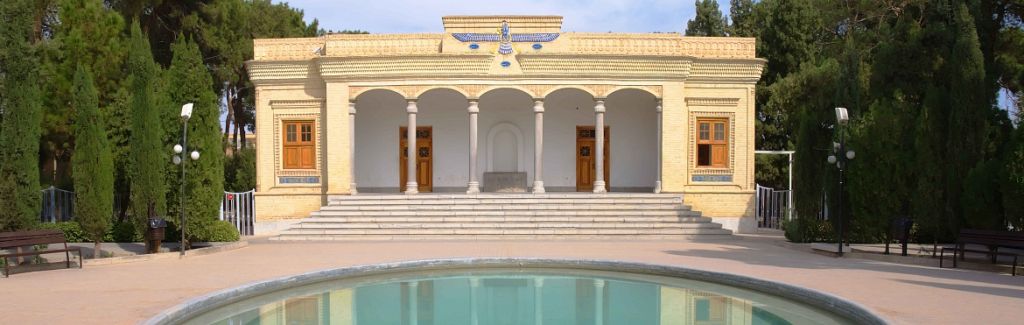
After breakfast, you'll visit the Ateshkod fire temple, where, according to researchers, the sacred flame has been burning since the 5th century. Next, you'll see the Towers of Silence-Zoroastrian structures used for "sky burial" rituals, described by Herodotus.
Transfer to Isfahan (311 km) via Meybod with its Narine Fortress, an example of Sasanian fortification (4th century). In the evening, you'll see the Khaju Bridge, a masterpiece of Safavid architecture, which, according to engineering studies, combined the functions of a dam, teahouse, and cultural center.
A Dialogue of Cultures and Masterpieces of Persian Architecture in the Heart of Isfahan
After breakfast, you'll visit Vank Cathedral, a unique example of the synthesis of Armenian Christian tradition and Persian art. Particularly noteworthy are the dome paintings, which, according to research, combine the techniques of Iranian and European masters of the Safavid era.
The highlight of the day will be a stroll through Naqsh-e Jahan Square, a World Heritage site where not only the empire's political but also commercial life flourished. Built in the early 17th century, the square is an urban architectural complex that encompasses the Shah Mosque, the Sheikh Lotfollah Mosque, the Ali Qapu Palace, and shopping arcades. All architectural monuments facing the square are listed as UNESCO World Heritage Sites.
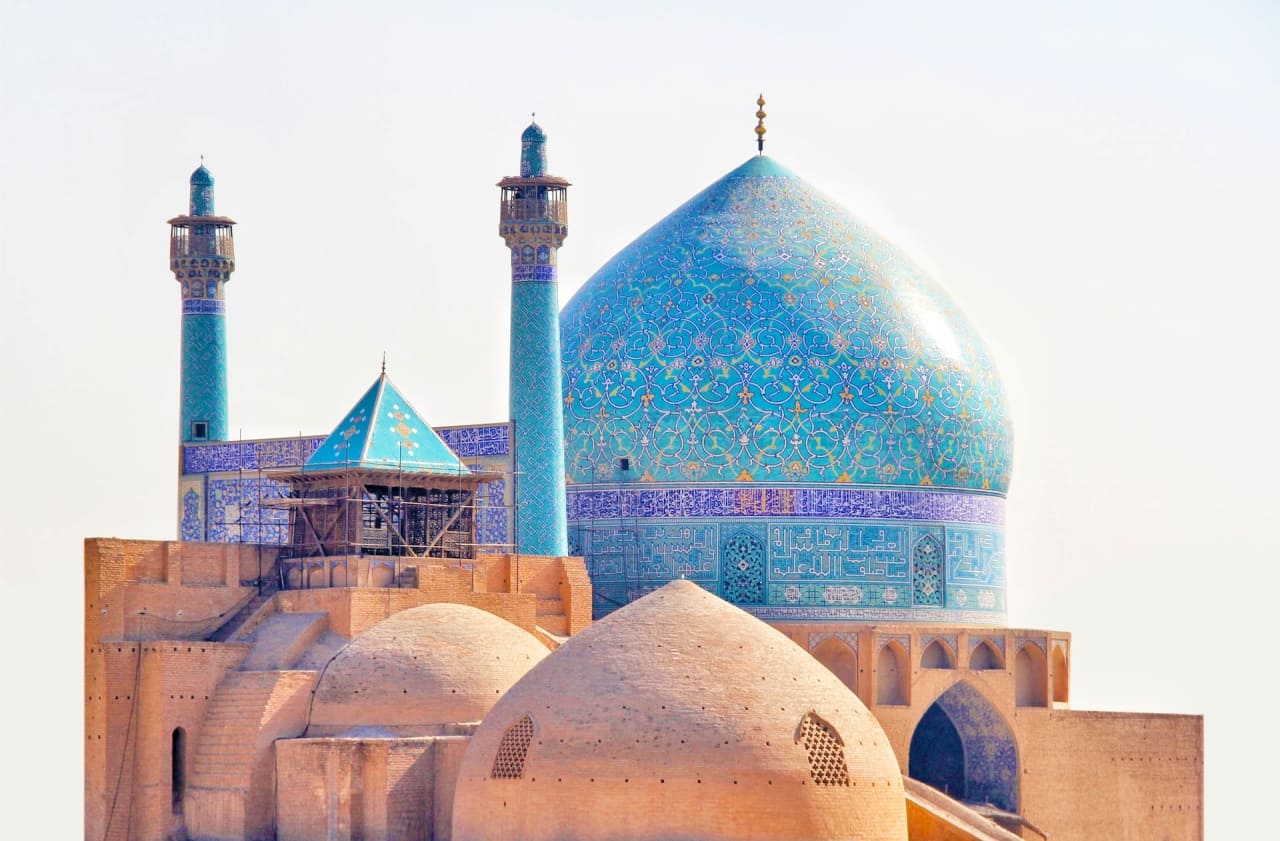
Of particular interest is the 17th-century Shah Mosque, renamed the Imam Mosque after the Islamic Revolution. The mosque building, crowned with a double-layered dome, is clad in glazed tiles in turquoise, light blue, and blue. At the entrance to the mosque are two enormous minarets, nearly 42 meters tall.
A tour of Abyaneh. Departure to Kashan.
In the morning, you'll head to the village of Abyaneh. The village is renowned for its unique red clay architecture, as well as its culture and customs, which are distinct from those of central Iran.
Among the residential buildings in the settlement are the ruins of a medieval military fortification, as well as a fire temple, mosques, pilgrimage sites, and three citadels. Local residents adhere to a specific traditional dress code and practice the ancient religion of Zoroastrianism. Women wear traditional costumes. There is a production of souvenir handicrafts, and local residents continue the tradition of hand-weaving.
After your walk around Abyaneh, you will continue your route to Kashan.
Kashan: Engineering Heritage and Historical Evidence
After breakfast, you'll visit the Sultan Amir Ahmad Hamam, where the original underfloor heating system, mentioned in medieval Persian engineering treatises, has been preserved. Archaeological evidence suggests that such structures served not only hygienic but also important social functions in urban life.
The Tabatabai House reveals the secrets of Safavid architecture. The stained glass windows were created using Byzantine techniques, and the wall paintings contain authentic quotations from classical Persian poetry. Archival documents confirm that the building's forty ceiling vaults are decorated with unique geometric compositions, never repeated.
The Fin Garden preserves the memory of key events in Persian history. According to historical chronicles, it was here that dramatic events associated with the famous state reformer unfolded. The garden contains trees that are five centuries old or more.
The route to Tehran runs along a section of an ancient trade route, as eloquently attested by the surviving caravanserais marked on ancient cartographic sources. Check-in at a hotel near the international airport.
Flight home.
- Tehran
- Kashan
- Isfahan
- Yazd
- Shiraz
- Golestan Palace
- Fin Garden
- Tabatabai House
- Sultan Amir Ahmad Bathhouse
- Bazaar of Kashan
- Persepolis (Takht-e Jamshid)
- Azadi Tower
- Pasargadae
- Naqsh-e Jahan Square
- Sheikh Lotfollah Mosque
- Yazd Tower of Silence
- Si-o-Se Pol Bridge
- Khaju Bridge
- Vank Cathedral
- Nasir al Molk Mosque
- Naqsh-e Rostam
- Holy Shrine of Shahecheragh
- Eram Garden
- Entry tickets
- Transfer
- Accommodation in a 4-star hotel
- Domestic flights
- Travel insurance
- Iranian visa
- International flights
- Lunches and dinners