
2700 BC – 540 BC
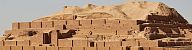
Elam was an ancient civilization with its center in the city of Susa, located in the southwestern part of modern Iran (now the provinces of Luristan and Khuzestan). The chronology of Elamite states spans the period from the 2nd–3rd millennia BC to the second half of the 6th century BC.
The Elamites inhabited these lands even before the arrival of the Aryans. At various times in their history, they established powerful kingdoms that successfully competed with the empires of Sumer, Akkad, Babylon, and Assyria.
Their dominance was ultimately ended by Assyria: in 640 BC, the Assyrian king Ashurbanipal conquered Elam and sacked Susa. Elam never revived as an independent state, but later became an important part of the Achaemenid Empire and exerted significant influence on its art.
Perhaps the most notable legacy of Elam was its language. The Elamite language became a true cultural and even political asset, uniting the countries and peoples of the then-civilized world. This language gave rise to Elamite linear script, which in turn influenced the world-famous cuneiform writing system.