In Sassanid Iran, a distinct literary tradition emerged — known as Pahlavi literature. Like elsewhere in the East, its foundation consisted of religious works, primarily Zoroastrian sacred texts such as the Avesta, and moral‑religious and theological writings like the Bundahishn and Arda‑Viraz‑namag
Historical texts from the Sassanid period have also survived, including:
- The Acts of Ardashir, Son of Papak — recounting the rise of the Sassanids to power;
- The Tale of Zarer — a Sassanid reworking of the military epic from the Parthian era.
Of particular importance is the Book of Kings (Khvaday‑namag) compiled under the Sassanids — a collection of historical and epic texts narrating the deeds of Iranian rulers from ancient times through the Sassanid era. Although the original book has not survived, a later medieval reworking is known to us as the Shahnameh.
Moreover, it is known that in Sassanid Iran — especially under Khosrow the Great — texts by Greco‑Roman writers, scholars, and philosophers were actively translated. Thus, it would be deeply mistaken to assume that the East was unaware of Western cultural achievements.
A special category of Sassanid written monuments comprises monumental inscriptions. Mostly composed in the name of kings, they recount military and other achievements. The most famous examples include:
- Inscriptions of King Shapur I on the Ka’ba of Zoroaster;
- Inscriptions of Narse at Paikuli.
Such inscriptions were not limited to kings — high Sassanid nobility also commissioned them. For instance, the supreme Zoroastrian priest of the late 3rd century, Kerdir, authored four monumental inscriptions (at the Ka’ba of Zoroaster, Naqsh‑e Rustam, Naqsh‑e Rajab, and Sar‑Meshhed), placed alongside royal inscriptions.
While literature remains the bedrock of national cultural tradition, the most visible monuments of Sassanid culture to an outside observer are works of fine art — particularly architecture. Among the earliest architectural monuments of Sassanid Iran are:
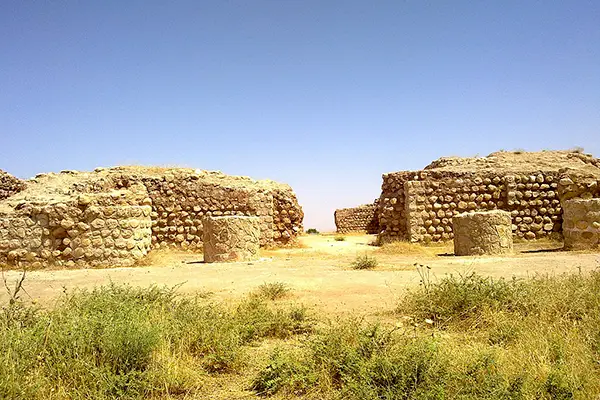
- The Palace of Ardashir I in Firuzabad;
- The Palace of Shapur I in Bishapur.
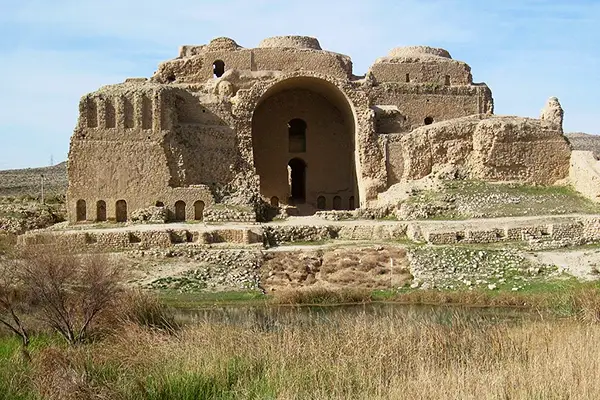
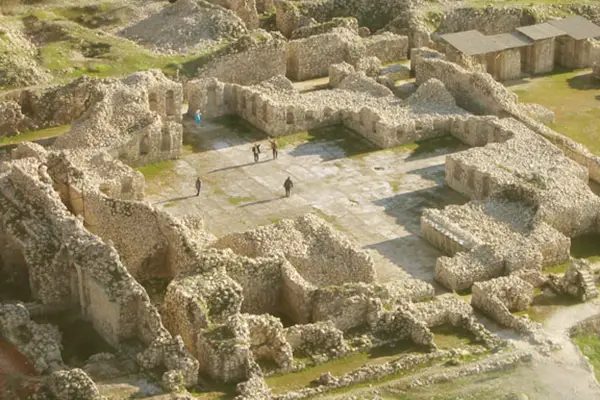
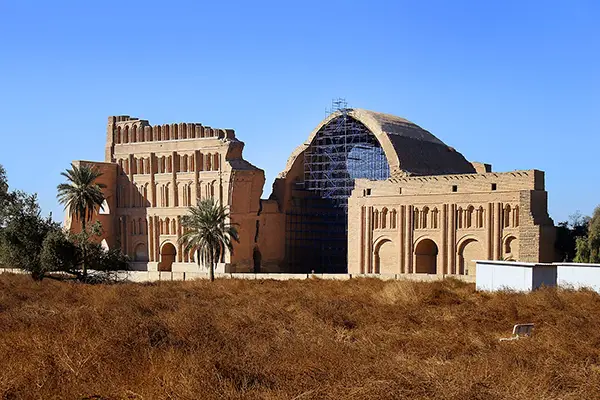
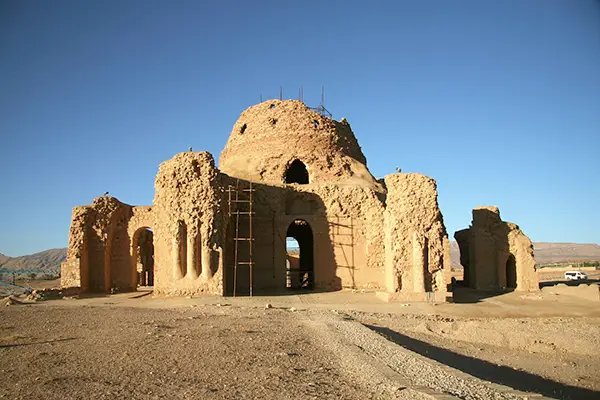
Other unique architectural monuments of the Sassanid era include:
- The so‑called Iwan of Khosrow (remains of Khosrow Anushirvan’s palace near the Sassanid capital of Ctesiphon);
- The Sarvestan Palace of King Bahram V Gur (420–440 CE);
- The Castle of Shirin of Khosrow II Parvez (590–628 CE), named after the king’s Christian wife.
Notably, Sassanid architectural monuments have survived on the territory of modern Russia. For example, the world‑famous Derbent Fortress in the Republic of Dagestan was built under King Khosrow the Great.
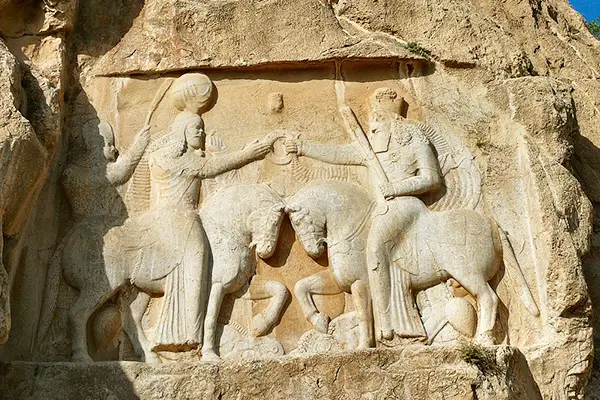
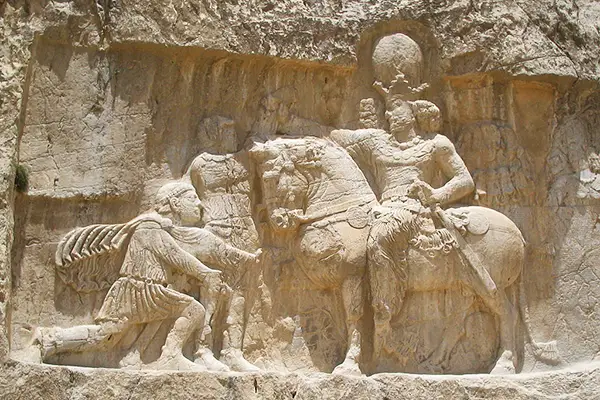
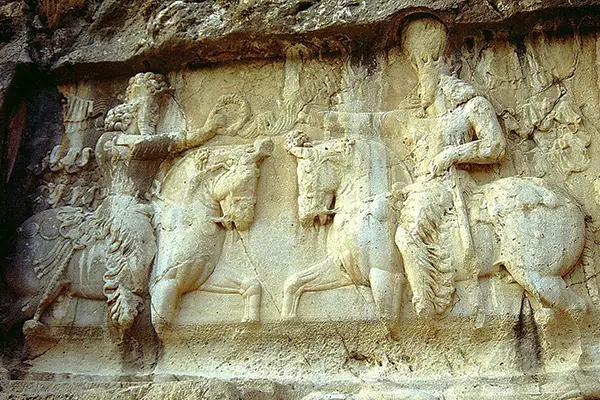
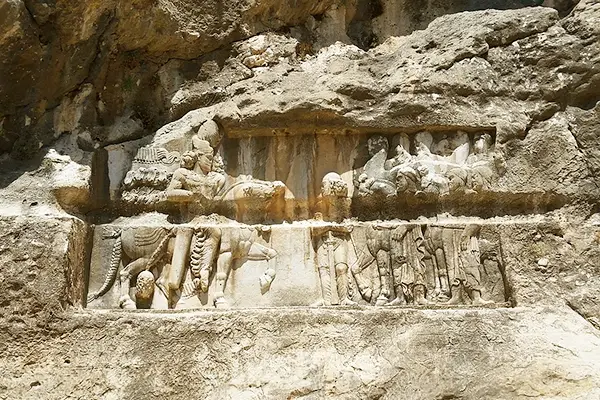
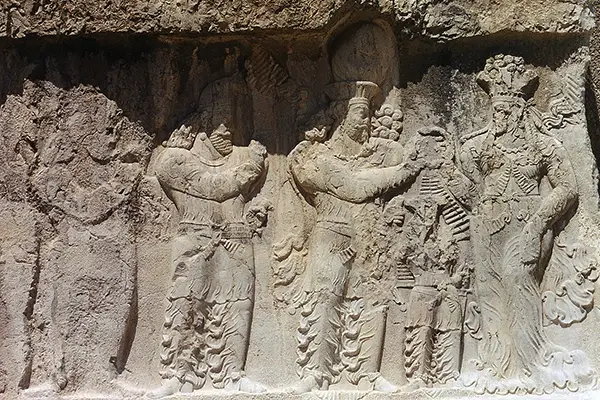
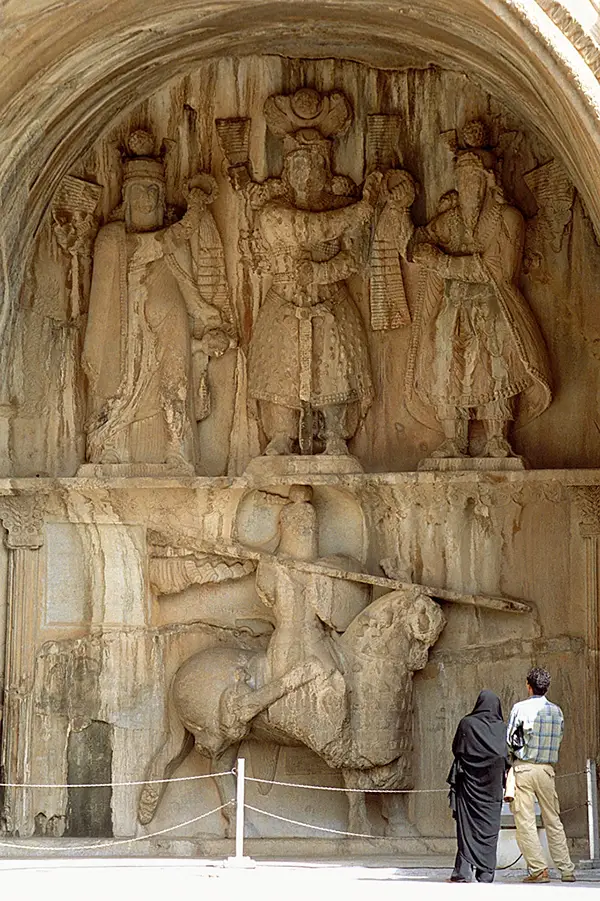
Equally, if not more, renowned to the general public are the monuments of Sassanid monumental sculpture — primarily rock reliefs. These were intended to:
- Commemorate military exploits and victories of the Sassanids (known as victory reliefs);
- Demonstrate the sacred nature of their power (wh ere kings are depicted alongside Zoroastrian deities — Ahura Mazda, Mithra, Anahita, etc.) — such reliefs are known as investiture reliefs.
Among the most outstanding examples are:
- Reliefs of Ardashir I in Firuzabad and Naqsh‑e Rustam;
- Reliefs of Shapur I in Bishapur and Naqsh‑e Rustam;
- Reliefs of Bahram I and Bahram II in Bishapur;
- Relief of Narse in Naqsh‑e Rustam.
Interestingly, the tradition of creating monumental reliefs virtually disappeared from the 4th century CE onwards, only to be revived towards the end of the Sassanid era — in the early 7th century. The most famous late Sassanid relief is the equestrian image of Khosrow II from the Great Iwan at Taq‑e Bostan.
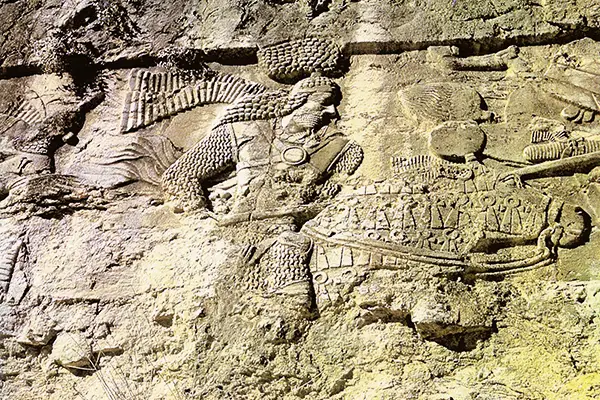
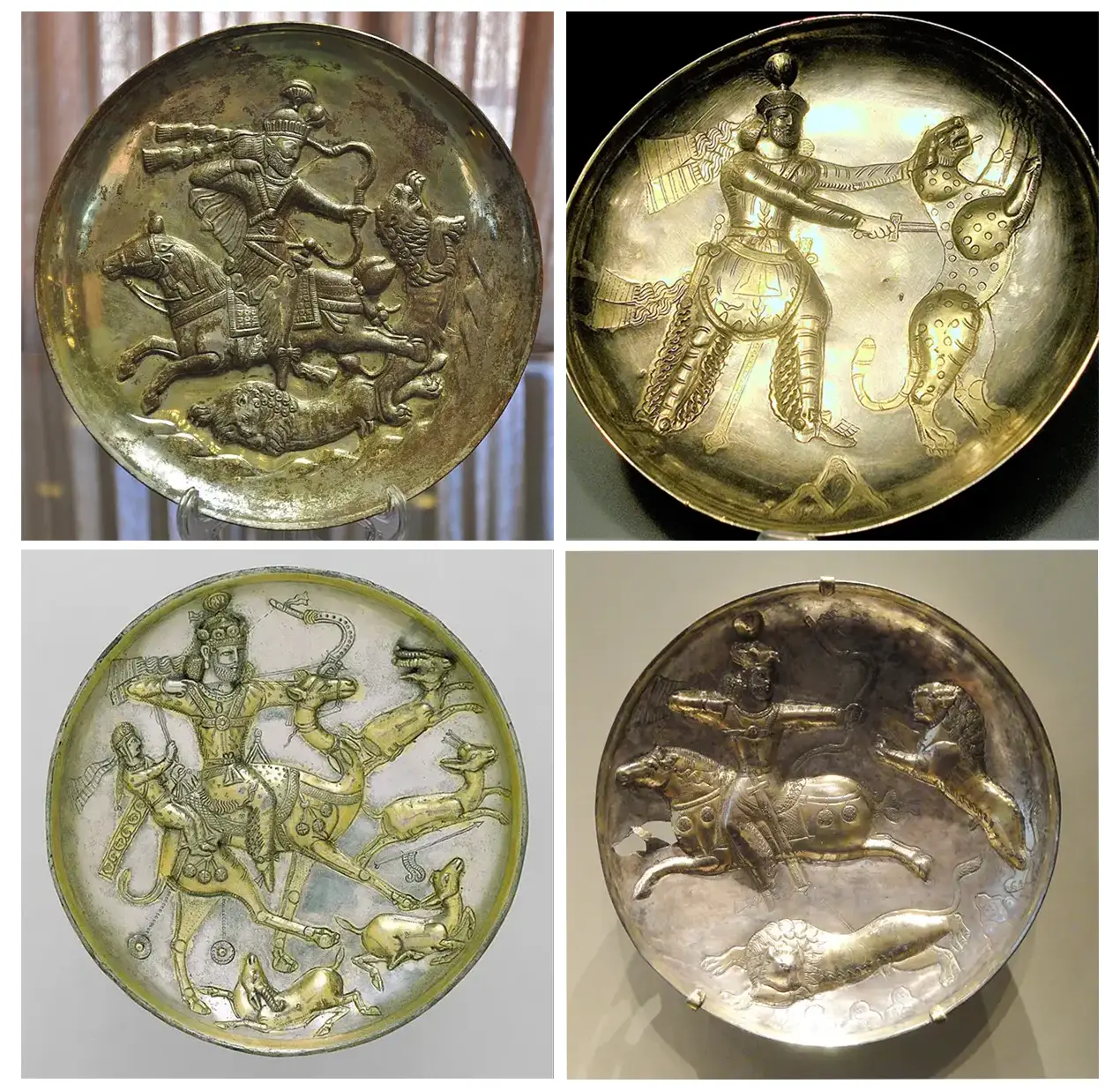
Finally, masterpieces of world‑class fine art include works of Sassanid toreutics — particularly depictions on silver plates. The main subject is the royal hunt, one of the oldest themes in the history of world visual art.
It is also worth noting that one of the richest collections of Sassanid silver is housed in our country — at the State Hermitage Museum.