
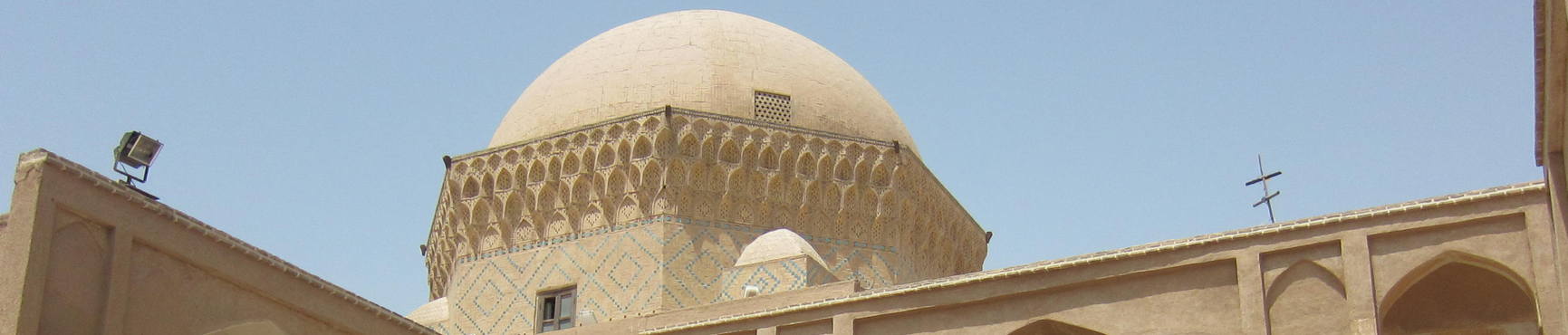
Stepping Back in Time: The Enigmatic Alexander's Prison in Yazd
Yazd, the ancient city forged from mud-brick and whispers of the desert, is a treasure trove of history. Among its winding alleyways and captivating courtyards lies an attraction that sparks both curiosity and debate: Alexander's Prison. But is it truly a prison, and did Alexander the Great really build it? Let's delve into its intriguing history and remarkable architecture.
A Tale of Two Histories: Prison or School?
Upon first glance, Alexander's Prison, or "Zendan-e Eskandar" as it's known locally, exudes an ancient charm. Its striking adobe dome, adorned with subtle blue and gold plasterwork, stands proudly in the historic Fahadan neighborhood. While popular legend, even referenced in the poetry of Hafez, connects this site to Alexander the Great and a supposed prison for his captives, historical evidence paints a different picture.
Many historians and experts believe the building was actually the Ziaeieh School, a renowned madrasa founded by Zia al-Din Hossein Razi in the 13th century. For centuries, it served as a center for learning and scholarly discourse.
So, where did the "prison" narrative come from? Some theories suggest that a deep well in the courtyard, perhaps originally part of a qanat system (underground water channel), might have been mistaken for a dungeon. Others believe the name emerged from the fear and apprehension locals felt towards Alexander during his invasion, leading them to associate imposing structures with his conquests. Regardless of its true origins, Alexander's Prison offers a fascinating glimpse into Yazd's past.
Architectural Marvels of the Desert
The architecture of Alexander's Prison, or the Ziaeieh School, is a testament to traditional Persian building techniques, particularly those from the Ilkhanid and Timurid periods, often referred to as the Azari or Iranian-Mongol style.
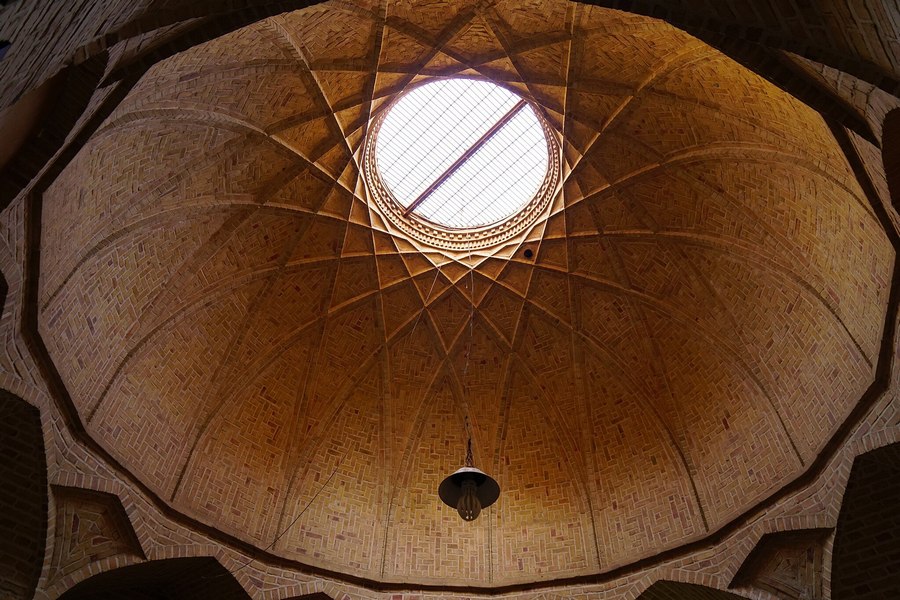
Mud-Brick and Adobe Construction: The primary building material is raw clay and mud-brick, a common feature in Yazd's historic architecture. This material provides exceptional insulation, keeping the interiors cool in the scorching desert heat. While predominantly mud-brick, baked bricks were incorporated, especially in the dome's outer shell during later restorations.
The Iconic Dome
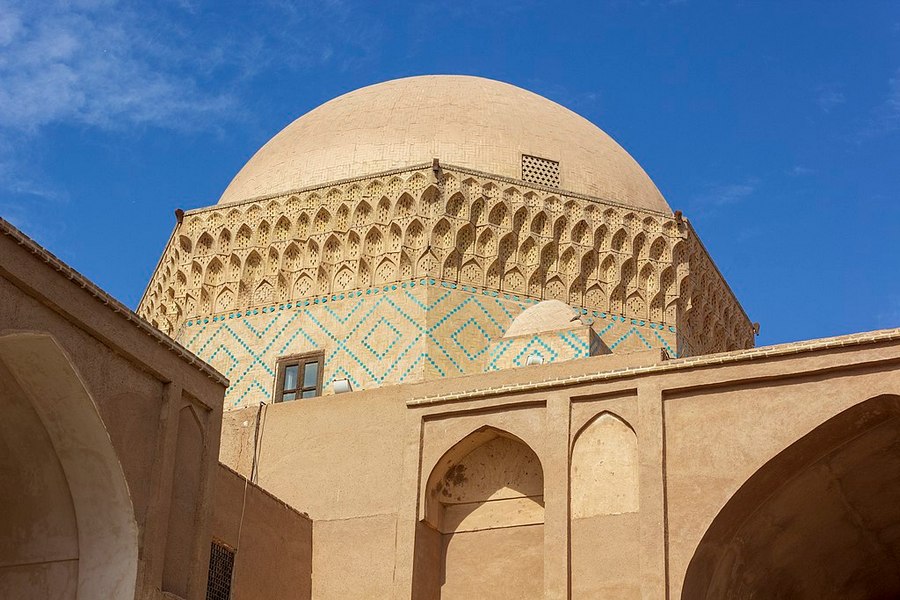
The most striking feature is its grand adobe dome, approximately 18-20 meters high, decorated with subtle blue and gold plasterwork. Its design echoes other domes from the Mongolian era in Iran, and inside, faint remnants of Kufic inscriptions can still be observed.
Courtyard and Water Features
The complex centers around a traditional Persian courtyard, a serene space for quiet contemplation. A deep, circular, brick-lined pit in the courtyard, often mistaken for a dungeon, is likely a payab — an underground chamber providing access to the crucial qanat system, showcasing the ingenious water management in this arid region.
Windcatchers (Badgirs)
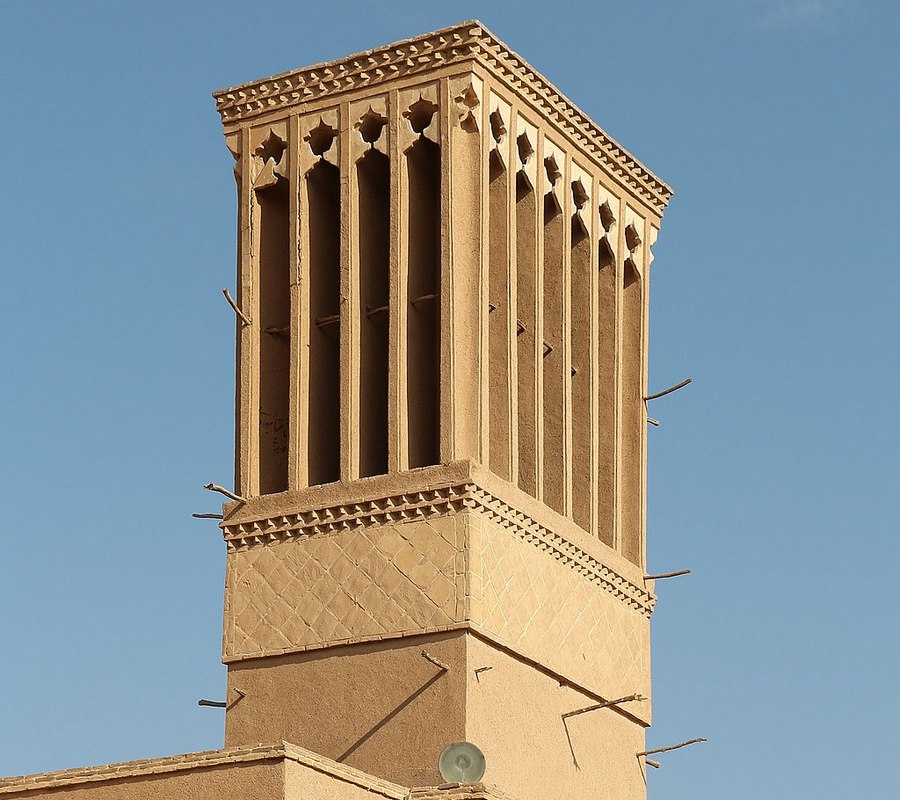
A vital element of desert architecture, a large windcatcher (Badgir) stands next to the main building. These ingenious structures are designed to capture prevailing winds and direct cooler air into the building, providing natural air conditioning.
Iwans and Chambers
The layout reflects a 13th-14th century madrasa, featuring a rectangular courtyard flanked by three iwans (vaulted open halls). The larger western iwan, along with smaller northern and southern ones, are adjoined by various rectilinear cells, suggesting possible modifications over time.
Subtle Ornamentation
Unlike some highly ornate Persian structures, Alexander's Prison exhibits a simpler, yet elegant, architectural style. Decorative tilework is minimal, with its beauty stemming from the robust mud-brick construction and the plaster embellishments on the dome. The upper part of the octagonal transition zone beneath the dome features a three-tier muqarnas cornice, a beautiful form of corbelled vaulting.
Today, the complex houses a museum displaying ancient artifacts, and the serene courtyard provides a tranquil escape from the bustling city. A visit to Alexander's Prison is more than just seeing an old building; it's an opportunity to delve into the captivating blend of history, legend, and local folklore that defines Yazd, leaving you with a deeper appreciation for this remarkable city and its enduring mysteries.
The prison's location in the Fahadan neighborhood provides an opportunity to wander through the old streets and discover other historical attractions nearby such as Fahadaan, Laariha House Museum and Jame Mosque of Yazd.
I want to visit
Alexander's Prison






Alexander's Prison
Visitor Information
- Opening Hours:
- Monday: 08:00 – 19:45
- Tuesday: 08:00 – 19:45
- Wednesday: 08:00 – 19:45
- Thursday: 08:00 – 19:45
- Friday: 08:00 – 19:45
- Saturday: 08:00 – 19:45
- Sunday: 08:00 – 19:45
- Entrance: Paid
- Cash/Credit Card accepted: Cash
- Region: Yazd Province
- City: Yazd
- Address: Fahadan neighborhood, Rakhtshur Khaneh street
- Postal code: 8916773918
- Phone number: +983536301760
- Is open to public visitors: Yes