
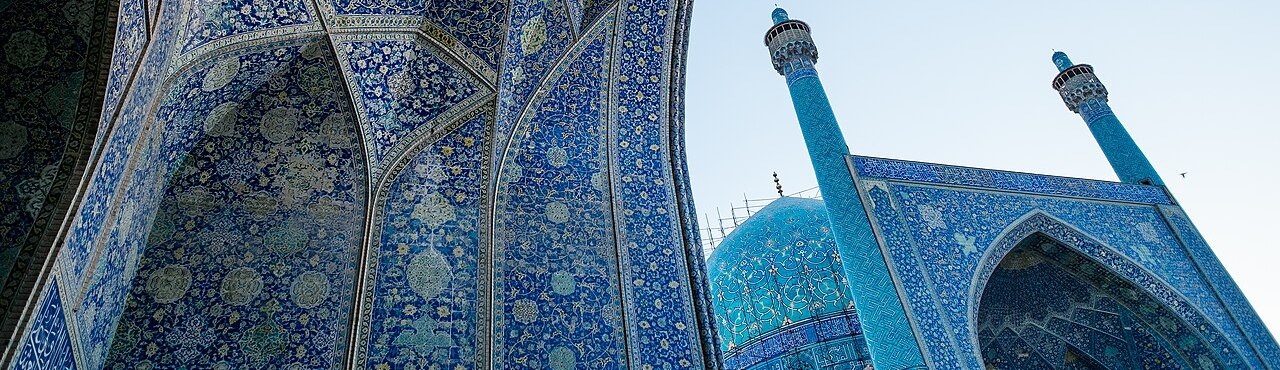
Imam Khomeini Mosque (Shah Mosque): A Jewel of Persian-Islamic Architecture
- Architectural Brilliance
- Historical Significance
- Acoustic Marvel
- Materials and Craftsmanship
- Cultural Legacy
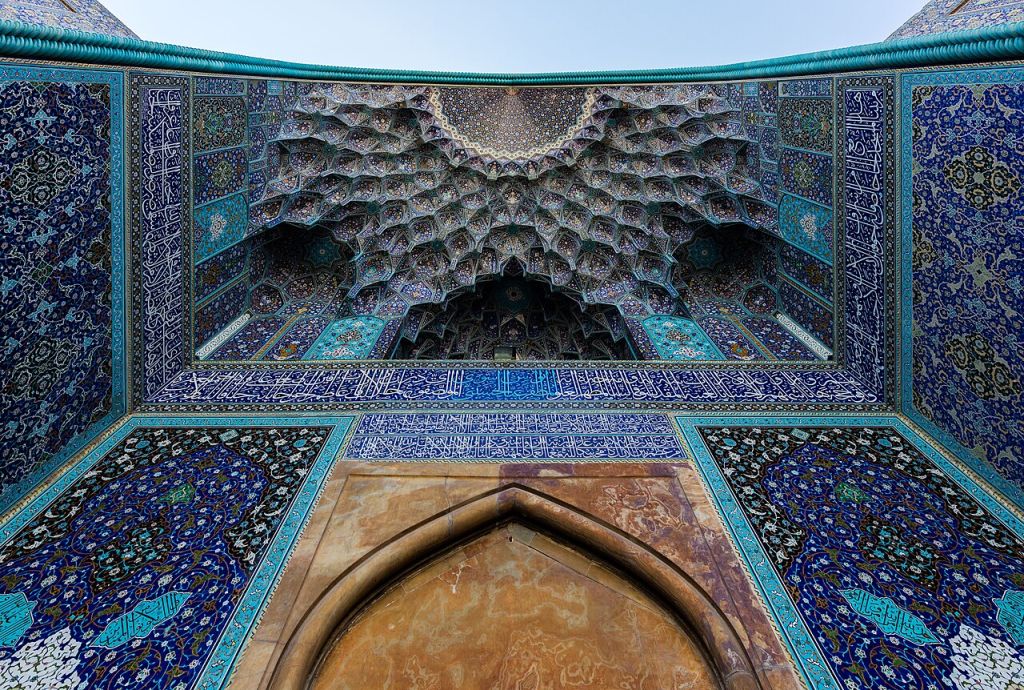
On the southern edge of Naqsh-e Jahan Square, where the heart of Isfahan beats with centuries of grandeur, stands the Imam Khomeini Mosque — once known as the Shah Mosque. Commissioned by Shah Abbas I in 1611 and completed around 1630, this mosque is not just a place of worship — it’s a masterpiece of Safavid-era architecture, a symbol of unity, and a canvas of Persian artistry.
Architectural Brilliance
Designed by Ali Akbar Isfahani, the mosque reflects the zenith of Persian-Islamic design. Its layout and features include:
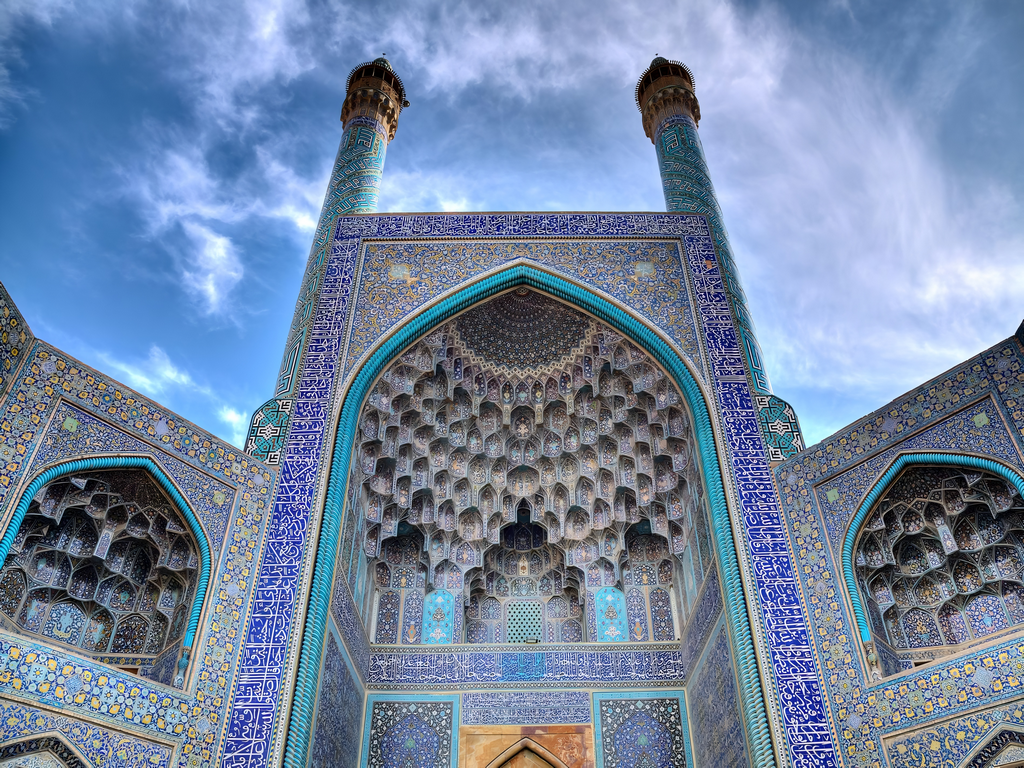
- Four-iwan plan: A traditional Persian configuration with monumental vaulted halls on each side of a central courtyard.
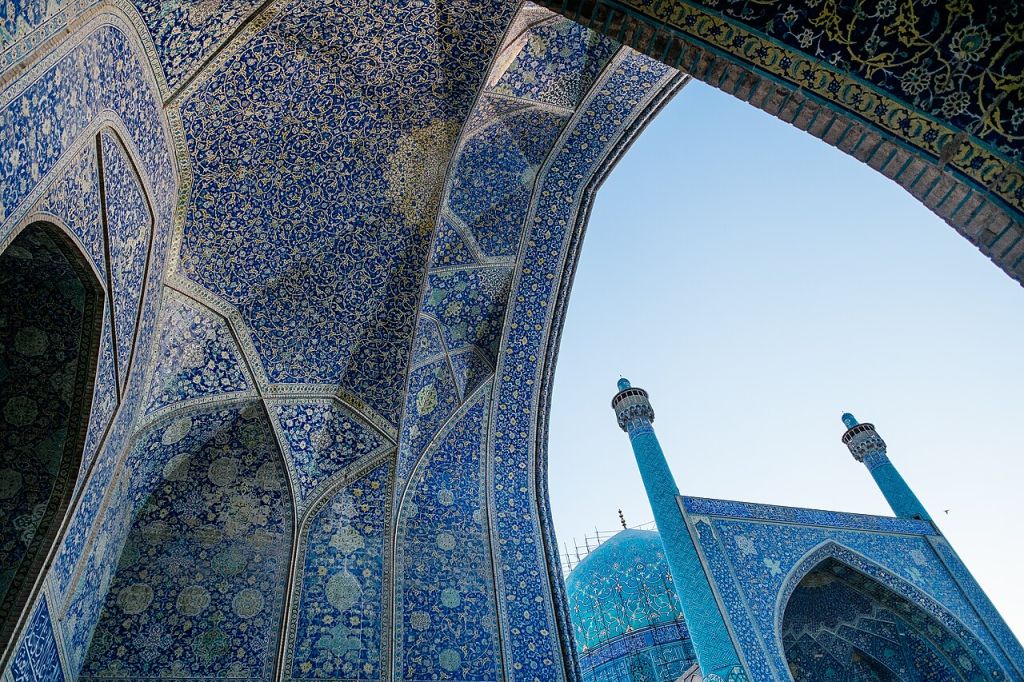
- Double-shelled dome: Measuring 52 meters high and 25 meters in diameter, it’s one of the tallest in Iran, with a 14-meter gap between the inner and outer shells for acoustic and structural brilliance.
- Seven-color tilework: A hallmark of Safavid decoration, with floral motifs, arabesques, and geometric patterns in vibrant blues, yellows, and greens.
- Calligraphy: Thuluth script inscriptions by Ali Reza Abbasi, one of the greatest calligraphers of the era.
- Minarets and guldasta: Four minarets frame the mosque, while a decorative guldasta (bouquet-shaped turret) replaces the traditional muezzin platform.
Historical Significance
The mosque was part of Shah Abbas’s grand vision to transform Isfahan into a capital of culture and power. Built during a time of political centralization, it served as both a religious center and a statement of Safavid authority.
- The mosque’s orientation was cleverly adjusted to align with Mecca, despite the square’s different axis — a feat of architectural ingenuity.
- It was renamed Imam Khomeini Mosque after the 1979 Islamic Revolution, reflecting Iran’s evolving identity.
- The mosque is featured on the 20,000 Rial banknote, symbolizing its enduring national importance.
- It was added to the Iran National Heritage List in 1932 and is part of the UNESCO World Heritage Site encompassing Naqsh-e Jahan Square.
Acoustic Marvel
The dome’s design allows a whisper to echo across the prayer hall — a deliberate feature enabling sermons to be heard without amplification. This acoustic precision is a testament to the mathematical and artistic genius of Safavid engineers.
Materials and Craftsmanship
- Constructed with over 18 million bricks and 475,000 tiles, the mosque is a monumental feat of labor and love.
- The muqarnas vaulting in the entrance iwan creates a cascading stalactite effect, drawing the eye upward in awe.
- The marble mihrab and alabaster dadoes add elegance and spiritual gravity to the prayer space.
Cultural Legacy
- The mosque anchors the southern end of Naqsh-e Jahan Square, complementing the Sheikh Lotfollah Mosque and Ali Qapu Palace.
- It continues to host religious ceremonies, cultural events, and architectural tours.
- Restoration efforts, including a major dome repair completed in 2024, ensure its preservation for future generations.
To visit the Imam Khomeini Mosque is to walk through a living manuscript of Persian history — where geometry meets poetry, and faith meets form. Whether you're an architect, a pilgrim, or a curious traveler, this mosque offers a moment of stillness in the rhythm of Isfahan.
I want to visit
Imam Khomeini Mosque (Shah Mosque)






Imam Khomeini Mosque (Shah Mosque)
Visitor Information
- Opening Hours:
- Monday: 09:00 – 17:00
- Tuesday: 09:00 – 17:00
- Wednesday: 09:00 – 17:00
- Thursday: 09:00 – 17:00
- Friday: 09:00 – 17:00
- Saturday: 09:00 – 17:00
- Sunday: 09:00 – 17:00
- Cash/Credit Card accepted: Cash
- City: Isfahan
- Address: The southern side of Isfahan's Naqsh-e Jahan Square and the Safavid State Palace area
- Postal code: 8144714813
- Phone number: +983132235112
- Is open to public visitors: Yes