
Takyeh Biglarbeygi: The Story of Art and Spirituality in Iranian Architecture
- Brief Introduction to the Historical Tekye of Biglar Beigi in Kermanshah
- History of the Takye Biglar Beigi
- Different parts that you can see in the Biglar Beigi Tekye
- How the rooms are located in the Biglar Begi Tekiye
- The beautiful and historic dome space in the Biglarbeygi Tekye
- In the Calligraphy and Inscription Museum of the Biglarbeigi Tekye
- The Zagros Paleolithic Museum is another museum in the Biglarbeigi Tekye
- Sighteeing near Takye BiglarBeigi
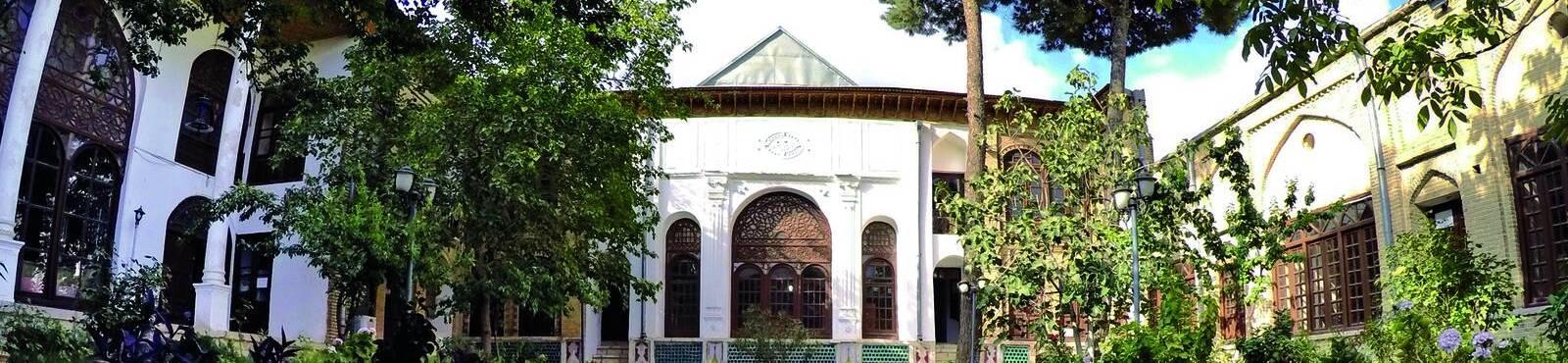
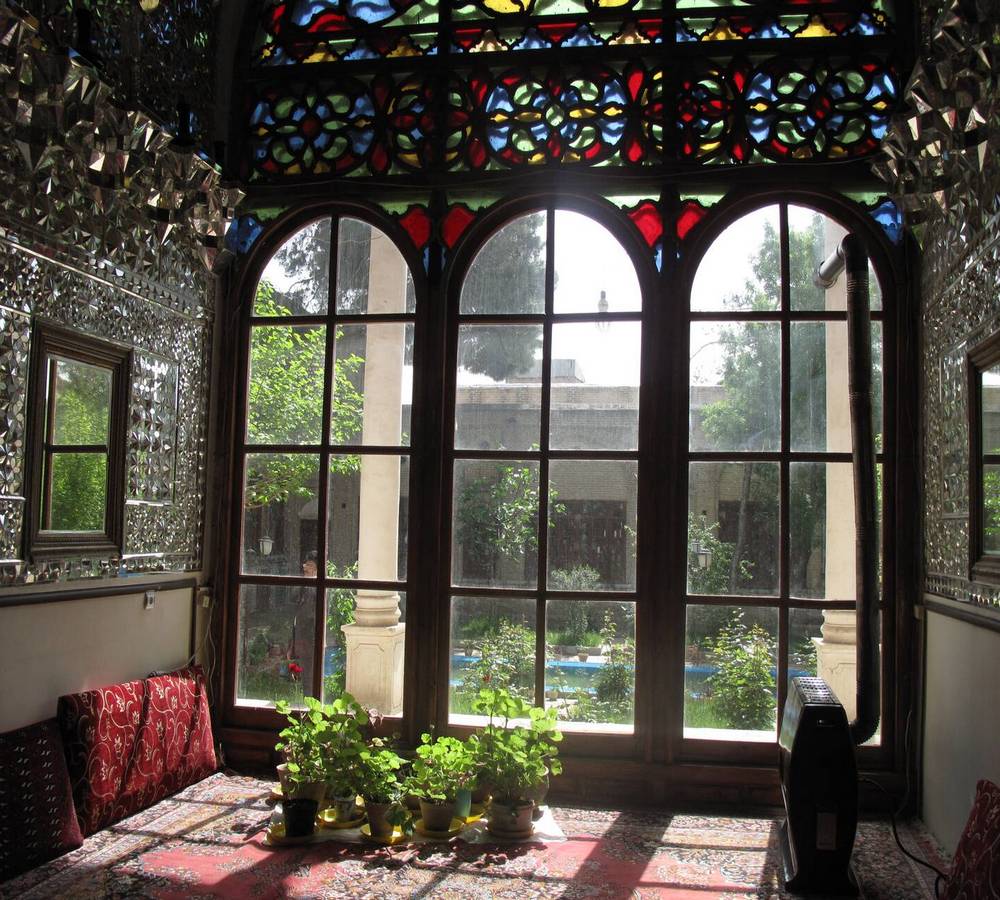
Tekye Biglar Beigi is one of the historical and beautiful places in Kermanshah, dating back to the Qajar period and built by a man named Abdullah Khan, nicknamed Biglar Beigi. This historical and beautiful Tekye was registered on December 19, 1977, with number 1797 in the list of national monuments of Iran, and is not only of great architectural interest; it also has beautiful mirror and stucco decorations that give it great charm. The first Paleolithic museum in the Middle East, called the Zagros Paleolithic Museum, as well as the Calligraphy and Book Museum, are located in Tekye Biglar Beigi, and by visiting this historical place, you have the opportunity to visit two attractive museums. Tekye Biglar Beigi is also called the Farashbashi Mansion.
Brief Introduction to the Historical Tekye of Biglar Beigi in Kermanshah
The historical Tekye of Biglar Beigi, located in areas of the historical context of Kermanshah, dates back to the Qajar period in terms of its construction date, and for this reason, it displays a combination of architecture that was prevalent in the Zand and Qajar periods in front of visitors. In addition to its historical value for Iran, this building has stunning architecture and mirror-work decorations that can be very attractive to any visitor to this place. During the hour you spend visiting this place, you will definitely come across many photo frames that belong to the founders of the Tekye and famous people of the city.
The location of the famous Zagros Paleolithic Museum and the Calligraphy and Book Museum in this Tekye of Biglar Beigi has increased the importance of this place and has made visiting this Tekye a must on a trip to Kermanshah. The area of the historical Tekye of Biglar Beigi in the past was over 4,000 square meters, and there was a lot of space on the left and right at the entrance of the building. The buildings on the left side of the teky were used to receive foreign guests, and the spaces on the right were for livestock and livestock. Now, because these parts have been given away, the teky of Biglar Beigi has an area of about 2000 square meters.
History of the Takye Biglar Beigi
The construction of the historical and beautiful teky of Biglar Beigi, located in the city of Kermanshah, began in 1309 AH by a person named the late Khadem al-Hussein Abdullah Khan Farashbashi, who was nicknamed Biglar Beigi and was a famous and very influential official of Kermanshah during the Qajar period. The construction of this teky was completed 6 years later, in 1315 AH, with the efforts of the architects of this period. Its decorations, which were stucco and mirror work, were also completed in 1326 AH, and it has been used since then. In the past, the Biglar Beigi Tekye was not only a regular place of worship in religious ceremonies, but also the place of residence of Abdullah Khan, as well as the place of residence of his brothers and sons. This Tekye was registered on December 19, 1977, with the number 1797, in the list of national monuments of Iran, and after purchasing the property in 1380, the Cultural Heritage carried out renovations in 1381 and 1382. In 1383, the Calligraphy and Writing Museum was established in this beautiful and historical Tekye, and in 1387, the very famous Zagros Paleolithic Museum began operating on the southern side.
Different parts that you can see in the Biglar Beigi Tekye
Entrance doors of the Biglar Beigi Tekye
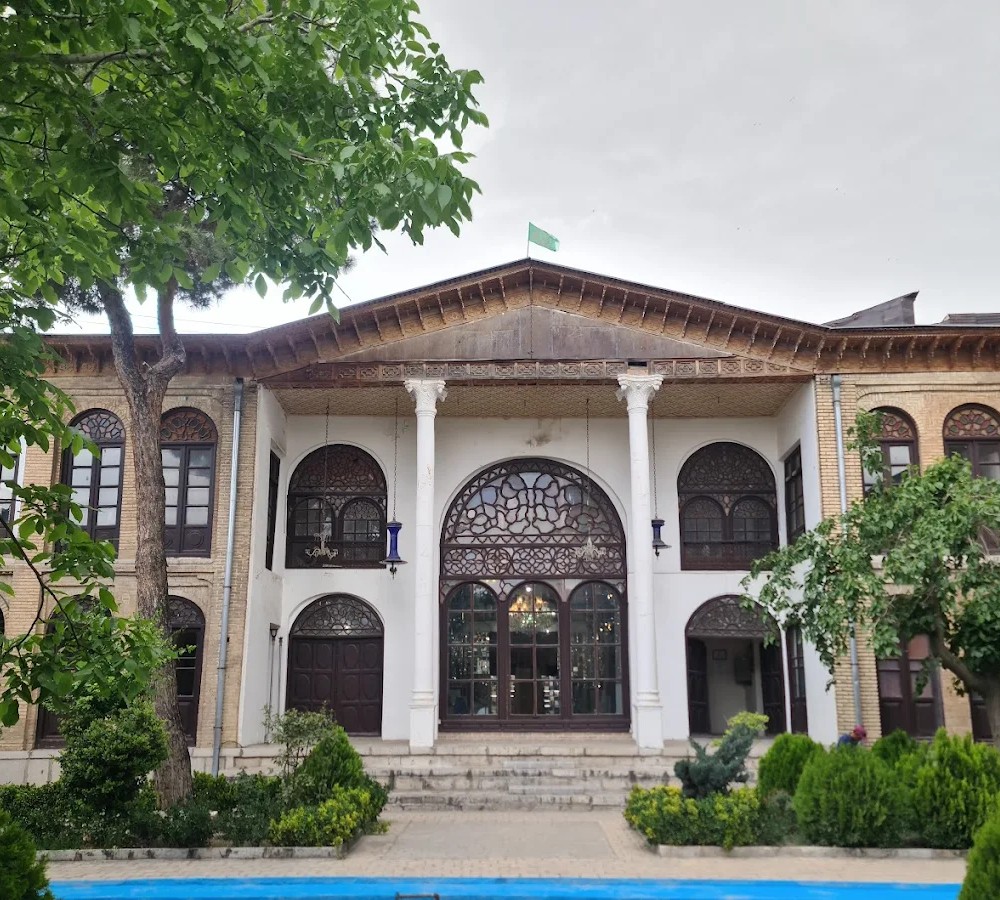
The beautiful Biglar Beigi Tekye, a relic of the Qajar period, has three entrance doors. The main entrance door is located in the southeast of the place. The entrance door of this beautiful and historical Tekye stands out with its plaster mogharnas and prominent stucco moldings. Also, on both sides of the entrance door, there are two rows of arches, the lower row of which is decorated with beautiful stucco moldings and stucco moldings. The decorations inside the upper row of arches are stucco figures of Qajar period figures.
The vestibule space of Tekye Biglarbey
After the entrance door in Tekye Biglarbey, there is a space called the vestibule. There are niches on the walls of this space and its ceiling is decorated with brick patterns. On the northern side of the vestibule space, there is a wooden door through which one can enter the houses affiliated with Tekye Biglarbey.
The corridor space in Tekye Biglarbey
After the vestibule space, there is a relatively long corridor, the end of which is connected to the main courtyard of Tekye Biglarbey and is decorated with decorative ornaments. On the south side of the corridor, you will see two wooden doors through which you can access the houses in the southern part of the Biglar Begi Tekye. On the north side of the corridor, there is another entrance that leads to a dead-end alley. Through this entrance, you can use the residential spaces on the northern side of the Biglar Begi Tekye. The third entrance is located on the southwest side.
Biglar Begi Tekye Courtyard
In the Biglar Begi Tekye, there is a relatively large courtyard with a large pond, the bottom of which is about 2.5 meters below the street level. This large courtyard hosts many mourners of the beloved Husseini in the month of Muharram. The hooks that have remained from the past in the western porch of the Biglar Begi Tekye indicate that in the winter season, they welcomed the mourners by setting up a tent in the courtyard of the Biglar Begi Tekye. In addition, on the northeast side of the large courtyard of the tekye, there is a kitchen that was used during Muharram to prepare food for mourners who came to this tekye of Biglarbey. The courtyard of the tekye of Biglarbey is made of stone, and in some parts you can see stone plaques with geometric and plant patterns. The courtyard is surrounded by many spaces, so that the northeastern and southern spaces of the tekye of Biglarbey were used for residential purposes, and in the western part, the dome house is located. The eastern part of the courtyard also has two-story spaces.
Southern part of the courtyard
The southern part of the courtyard consists of four spaces, three of which have sash windows. To access these spaces, a stone staircase inside the courtyard of the Biglerbey tower is used. This part of the Biglerbey tower is also about one meter above the floor of the courtyard. In the northern part of the courtyard, it has two floors. A basement has also been built in this part, which can be accessed via a staircase inside the courtyard. The basement of the Biglerbey tower has a pond, a summer resting place, and a number of rooms. The basement windows are in the form of lattice windows or so-called beehives, which actually serve as windbreaks and have the same function as the basement. The roof of the pond and summer resting place is covered with wooden beams and battens, and the surrounding rooms have brick arches with stucco decorations. Between the pond and the rest area, two beautiful wooden columns with Muqarnas carvings can be seen, with the shafts of the columns being multi-faceted and the capitals being wooden capitals.
How the rooms are located in the Biglar Begi Tekiye
The Biglar Begi Tekiye has 24 rooms. Access to these rooms, which are located on the first floor, is possible via stairs inside the courtyard. The floor of the rooms is one meter above the courtyard level, and in each of these rooms in the Biglar Begi Tekiye, 16 two-story niches have been built, which were used to store and protect the personal belongings of the people in the rooms. The rooms located on the second floor of the Biglar Begi Tekiye are 1.5 meters high and were used as a warehouse. To access the second floor, one must use the stairs in the southeast room of the Biglar Begi Tekiye.
Shahneshin
The location of the Shahneshin in the Biglar Beigi Tekye is on the first floor of the northern part and there are many spaces around it. In the Shahneshin, you can see very beautiful wooden sashes with plaster columns on both sides. The stems of these columns have spoon decorations and the capitals are Byzantine capitals with floral and plant designs and patterns. The interior of the Shahneshin in the Biglar Beigi Tekye also has stucco decorations and geometric designs, plant patterns, frames, eagle patterns and plaster columns, which have created a lot of attraction for every viewer. In the upper part of the Shahneshin space in the Biglar Beigi Tekye, a plaster frame can be seen with the phrase "Ya Aba Abdullah Al-Hussein and the date 1262" written inside it and it seems that the date left over from this writing is the time when the stucco of the Tekye was completed. Most likely, the Shahneshin room was used for receiving and meeting people with Biglarbeygi, and the surrounding rooms and the upper floor were spaces for relaxation.
The beautiful and historic dome space in the Biglarbeygi Tekye
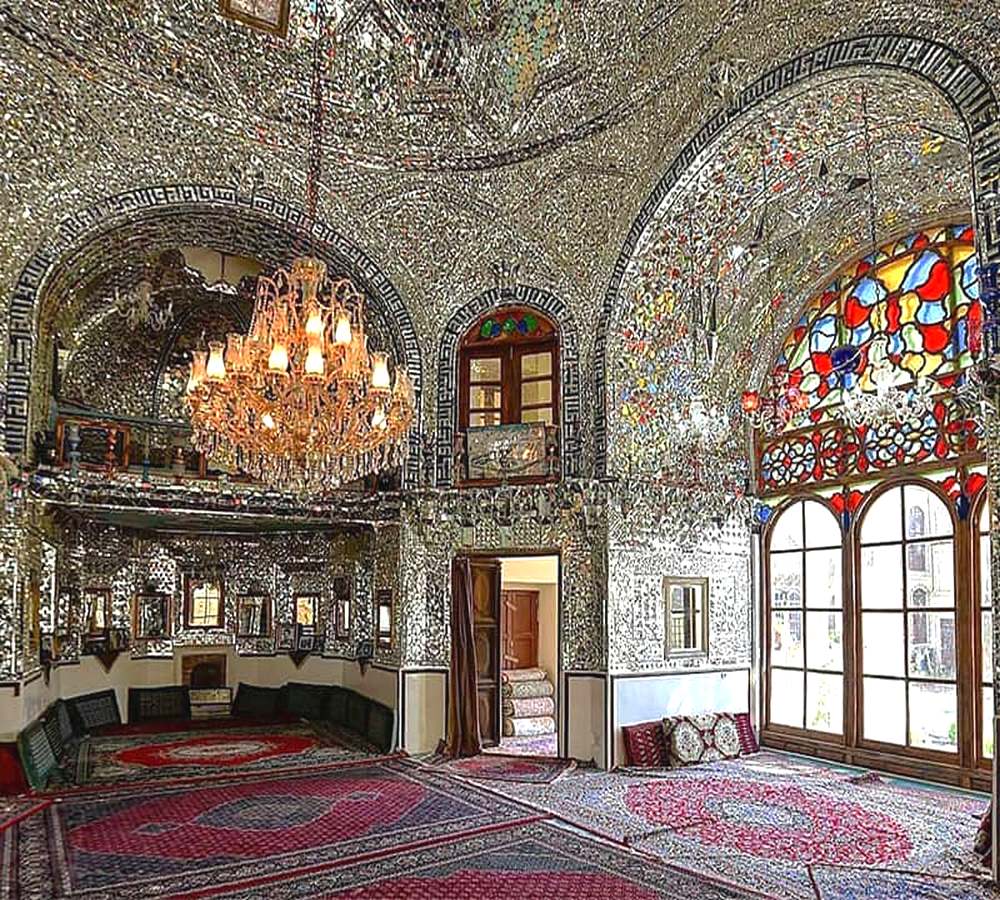
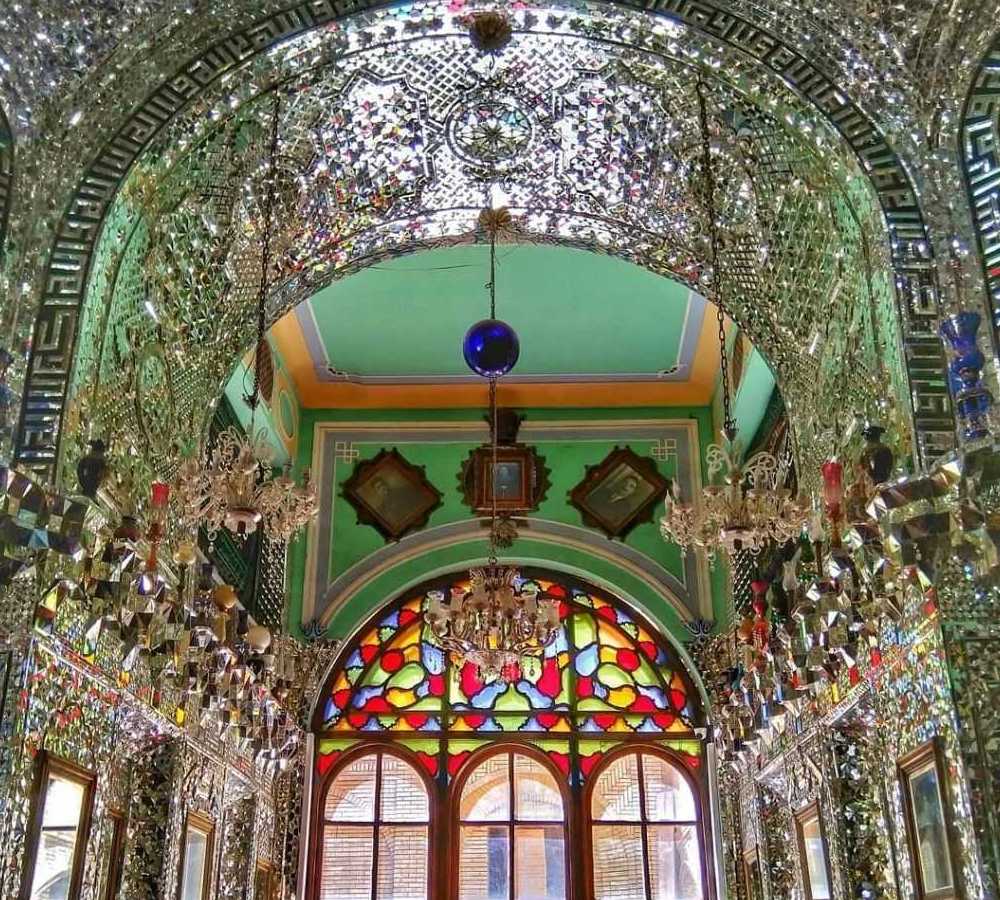
The dome space in the Biglarbeygi Tekye is considered its most important part, as this space is located in the western part of the Tekye and has a relatively large veranda that is connected to the courtyard via a stone staircase. Two relatively tall wooden columns and two facade columns can be seen in this veranda, each of which is covered with plaster. Their capitals are decorated with floral and plant stucco moldings, similar to Byzantine capitals. Carved decorations have been used on the ceiling of the veranda. There is a large wooden door with a beautiful sash in the veranda that connects it to the main space of the Hosseinieh. The Hosseinieh space in the Tekye is two-story, with 6 rooms on each floor. The roof of the Hosseinieh is covered with a dome, with a gable on the exterior and beautiful mirror work on the interior. In each of the earrings of the Hosseinieh space, there is a window with a crescent-shaped arch, and around it are written the holy phrases “La ilaha illallah Muhammad Rasoolullah” and “Ali Waliullah” in mirror work. The mirror work of this section was done in 1947 by Master Mohammad Ali Tehrani. Other decorations of the Hosseinieh that attract the attention of visitors include the plaster columns, geometric designs, plant patterns, and candle-burning lamps. On the southern side of this space, there is a beautiful sash with colored glass and connects the Hosseinieh to a smaller courtyard. Through this courtyard, one can enter the Biglarbeygi Bath complex. The southern part of the Hosseinieh space was used for women to attend mourning ceremonies and store mourning equipment and supplies. On the western side of the Hosseiniyeh, there was a large royal residence that was unfortunately destroyed in recent years due to the widening of Modares Street.
In the Calligraphy and Inscription Museum of the Biglarbeigi Tekye
The Calligraphy and Inscription Museum of the historical city of Kermanshah was established in the Biglarbeigi Tekye in 2004 and includes historical documents, records, and manuscripts. Documents related to the Biglarbeigi family are also available in this museum. About 300 valuable historical documents and manuscripts are kept in the Calligraphy and Inscription Museum of this Tekye. Given the great age of these documents, some of the copies have been translated into modern Persian and are placed alongside other documents for viewing.
The Zagros Paleolithic Museum is another museum in the Biglarbeigi Tekye
The Zagros Paleolithic Museum is the name of a specialized museum that operates in the field of prehistory and is located in the Biglarbeigi Tekye. This museum was founded in 2007 by Fereydoun Biglari and Alireza Moradi Bistouni. The Paleolithic areas in the Zagros and the favorable conditions of this area due to hunting were the main reasons for establishing this museum in this location.
Sighteeing near Takye BiglarBeigi:
You can visit Takiye Moaven Al Molk that is located near Takye Biglarbeigi in Kermanshah.
I want to visit
Takyeh Biglarbeygi






Takyeh Biglarbeygi
Visitor Information
- Opening Hours:
- Monday: 08:00 – 17:00
- Tuesday: 08:00 – 19:00
- Wednesday: 08:00 – 19:00
- Thursday: 08:00 – 19:00
- Friday: 08:00 – 19:00
- Saturday: 08:00 – 19:00
- Sunday: 08:00 – 19:00
- Entrance: Paid
- Cash/Credit Card accepted: Cash
- Region: Kermanshah Province
- City: Kermanshah
- Address: Modares Street, opposite the Grand Mosque
- Postal code: 6718997551
- Phone number: +988337286579
- Is open to public visitors: Yes