
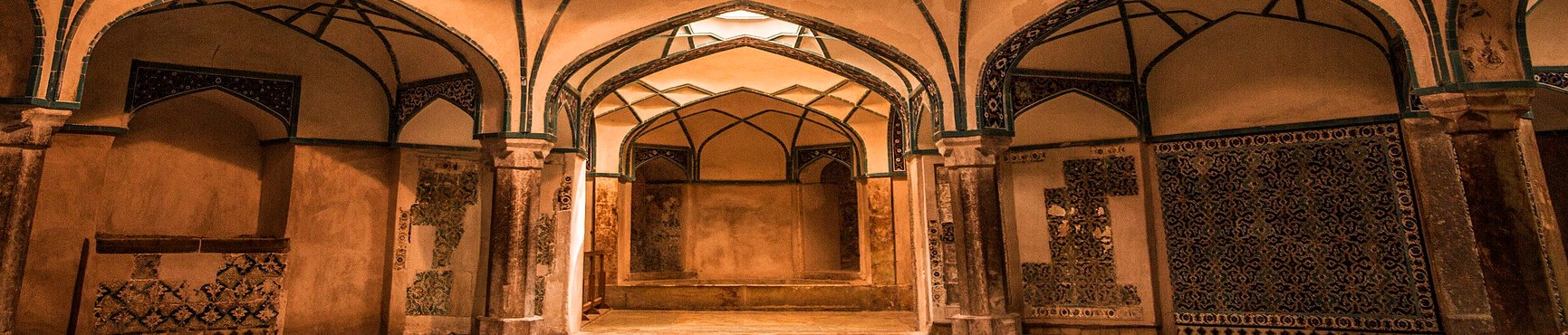
Ganjali Khan Bathhouse: Kerman’s Living Memory of Wellness and Design
- Origins in the Safavid heartbeat of Kerman
- A bathhouse of craft, climate, and choreography
- Why Ganjali Khan Bathhouse still matters
Origins in the Safavid heartbeat of Kerman
Ganjali Khan Bathhouse rises from the early 17th century, commissioned by Ganj Ali Khan — the powerful Safavid governor under Shah Abbas I — and attributed to architect Mohammad Soltani of Yazd. Woven into the larger Ganjali Khan Complex in Kerman’s old center, the bathhouse sits just off the bazaar arcades and the lively square, signaling how hygiene, commerce, and community were meant to flow together. In 1971, the hammam was transformed into an anthropology museum; its lifelike statues — designed a few years later — recreate the rituals and roles of a public bath that once pulsed with local conversation and care.
This was never a standalone monument. It was part of a deliberate urban choreography — school, caravanserai, mosque, bazaar, mint, ab anbar — all arranged to make civic life practical and beautiful, a living blueprint of Safavid-era ambition and everyday intimacy.
A bathhouse of craft, climate, and choreography
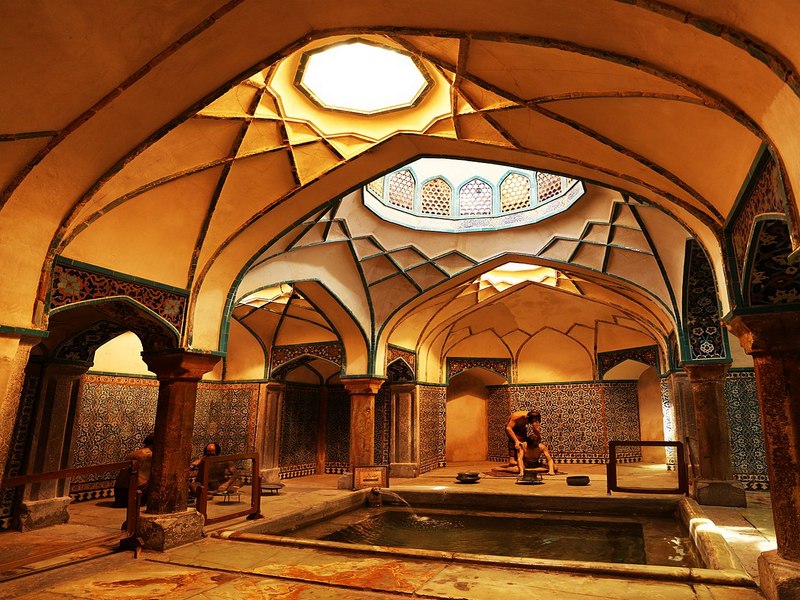
Step inside and the plan reads like a graceful sequence: a disrobing hall, then cold and hot rooms, each crowned by domes carried on squinches to manage light, heat, and sound. Surfaces are alive — tilework, frescoes, stucco, calligraphy, and carved stone — so meticulously aligned that the sculpted ceiling stones echo the patterning underfoot. The entrance, painted in Safavid ornament, ushers you from the bustle of the bazaar into a world tuned to water, warmth, and whispering domes.
The details tell on-the-ground stories: light-wells prickle the ceilings to temper the climate; long, low corridors retain heat; and in some accounts, two red-hued stones once marked time by the sun’s rays. Even the dressing rooms mirrored social strata — chambers set aside for different classes, with a “shah-neshin” to anchor hierarchy in architecture. Over time, Qajar-era painting joined Safavid layers, turning the hammam into a palimpsest of color, poems, and public life.
Why Ganjali Khan Bathhouse still matters
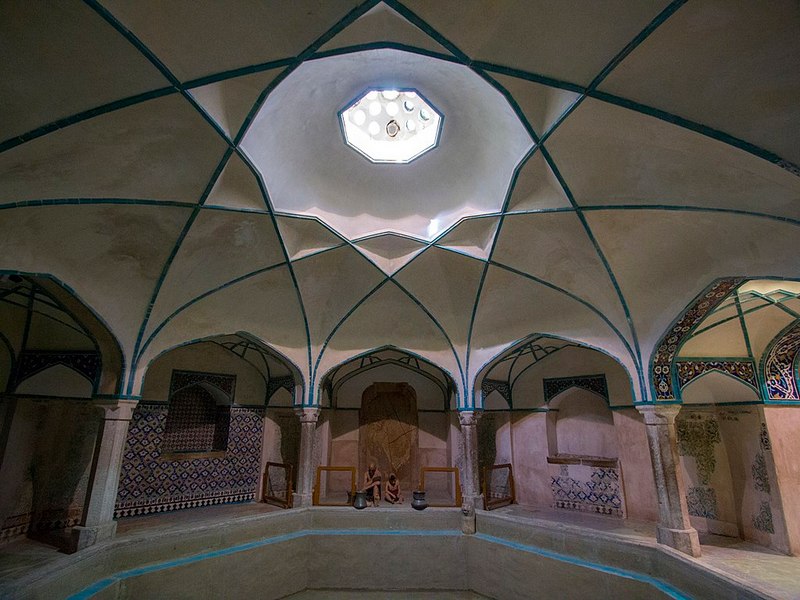
Its significance lives on three levels. First, as architecture: an Isfahani-style masterpiece where structure and ornament serve climate, acoustics, and circulation without sacrificing beauty. Second, as urban design: positioned along Vakil Bazaar and the square, it stitched hygiene, commerce, and sociability into one daily route. Third, as memory-keeper: the museum conversion preserves gestures — washing, massage, gossip, ceremony — so visitors can feel, not just learn, how a city once took care of itself.
But there’s a quieter truth you notice when you linger: this bathhouse is about belonging. Warm rooms, tuned light, the hush of water — everything says people mattered here. In a world that often rushes past ritual, Ganjali Khan Bathhouse reminds us that public spaces can still be tender spaces, and that care — of body, of community, of craft — can be a city’s most enduring legacy.
I want to visit
Ganjali Khan Bathhouse






Ganjali Khan Bathhouse
Visitor Information
- Opening Hours:
- Tuesday: 08:00 – 14:00
- Wednesday: 08:00 – 14:00
- Thursday: 08:00 – 14:00
- Friday: 08:00 – 14:00
- Saturday: 08:00 – 14:00
- Sunday: 08:00 – 14:00
- Entrance: Paid
- Cash/Credit Card accepted: Cash
- Region: Kerman Province
- City: Kerman
- Address: Kerman Grand Bazaar, next to Ganjali Khan Square
- Postal code: 7618963117
- Phone number: +983432225577
- Is open to public visitors: Yes