
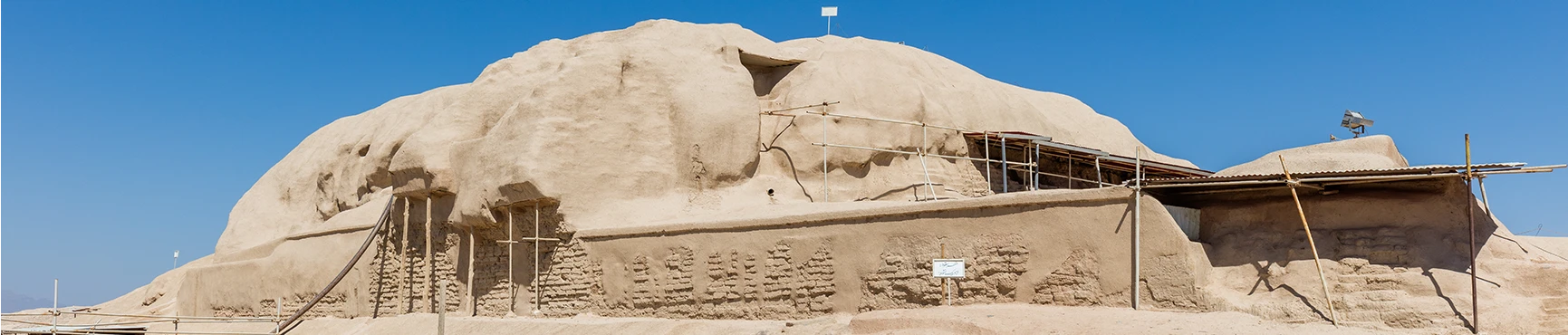
Sialk Hill: A Historical Journey Through Civilization
- Sialk Hill: A Historical Journey Through Civilization
- Location of Sialk Hill
- History of Tepe Sialk
- The Origin of the Name "Sialk Hill"
- Ancient Artifacts of Tepe Sialk
- sightseeing near Sialk Hills
Sialk Hill, with its rich history spanning 8,000 years, stands as a testament to the evolution of human civilization. Over the centuries, this area has seen remarkable development—from the construction of simple homes made of straw and wood to the establishment of cities and the initiation of trade with neighboring regions. Visiting Sialk Hill offers a unique opportunity to step back in time and witness artifacts that provide insight into the advancements of civilization and industry in the distant past. These artifacts include pottery pieces, jewelry, weaving spindles, metal tools, handmade bricks, pottery wheels, and, most notably, ziggurats—places of worship.
Location of Sialk Hill
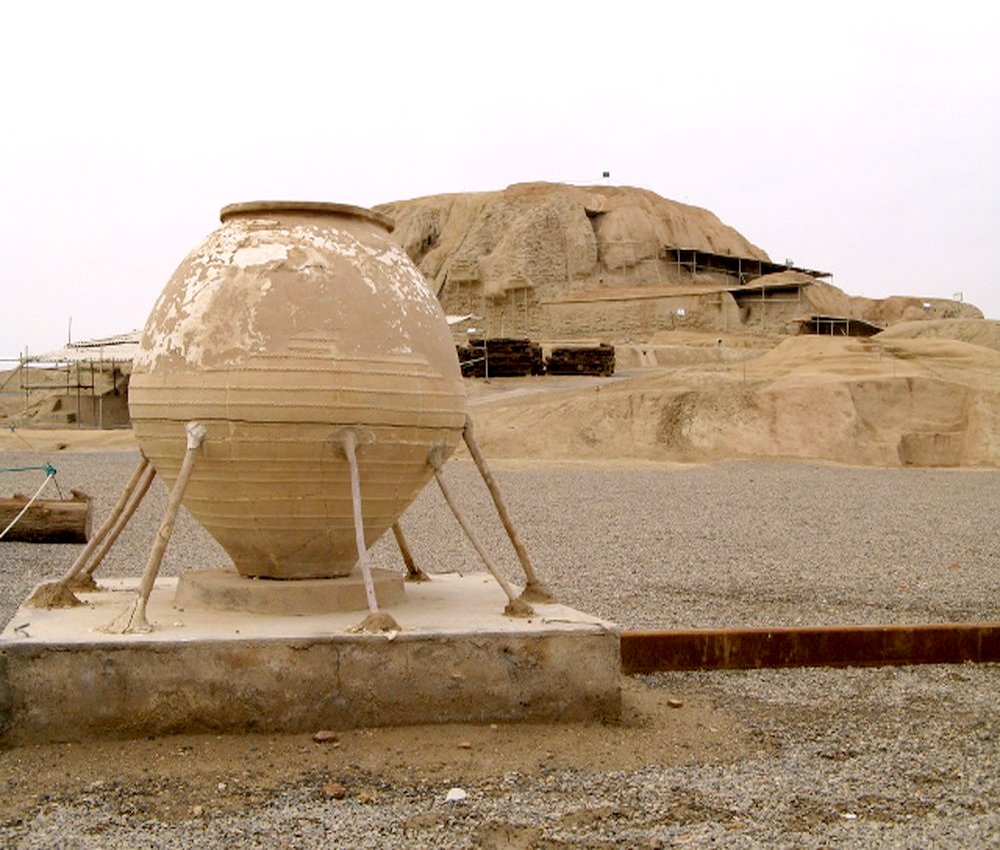
Sialk Hill is situated in Kashan, Isfahan Province, on Amir Kabir Street, at the end of Zolfaqar Dahm, within the Silk Cultural Heritage Base. This ancient site lies to the southwest of Kashan, on the right side of the Kashan-Fin road.
History of Tepe Sialk
Tepe Sialk, with its 8,000-year history, is one of the most significant indicators of the existence of civilization and industry in ancient times. The discovery of primitive pottery, spinning and weaving spindles, metal tools, and smelting furnaces suggests that this was an advanced city during its time. A visit to this historical site allows you to explore the various stages of human civilization—from the Neolithic Age to the Copper and Stone Ages, the Urban Age, the Iron Age, and the Median Period. It’s awe-inspiring to consider how such impressive structures were built with the limited resources available at the time. Tepe Sialk is believed to house the oldest ziggurat in the world, serving as a shrine for ancient gods. Unfortunately, this once-thriving civilization was lost to a flood about a century ago, leading to extensive looting by antique dealers. In response to this tragedy, archaeologist Roman Grishman from the Louvre Museum felt a sense of responsibility to help preserve this heritage. He led a French delegation to Iran and excavated the ancient site from 1933 to 1936. The findings of these excavations were compiled into a two-volume book titled *Tepe Sialk Kashan*, which was later translated into Persian by Iranian Cultural Heritage Publications. Regrettably, after the French excavations, Tepe Sialk fell into neglect, nearing complete destruction. In 2001, a breakthrough occurred when an Iranian archaeological team led by Dr. Sadegh Malek Shahmirzadi undertook a five-year exploration of this forgotten civilization. Among their significant discoveries was the Sialk Ziggurat, which Grishman had previously overlooked. The research results from this team were published in six volumes, preserving invaluable information about this lost civilization that was saved at the last moment.
The Origin of the Name "Sialk Hill"
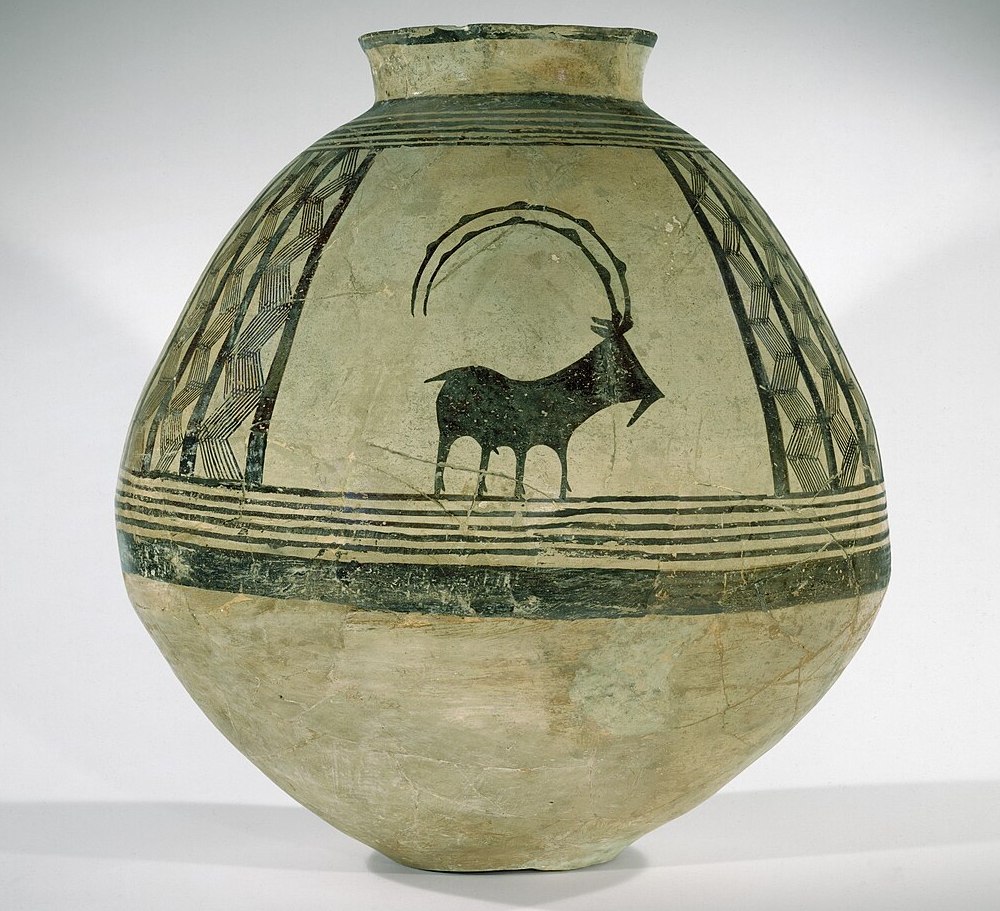
The exact reason for naming the area "Sialk Hill" remains unclear. One theory suggests that it is derived from the term "Siala," which referred to the cup-making process in ancient times, as this hill was likely a location where such items were crafted. Various other speculations exist, although none have been conclusively proven.
Ancient Artifacts of Tepe Sialk
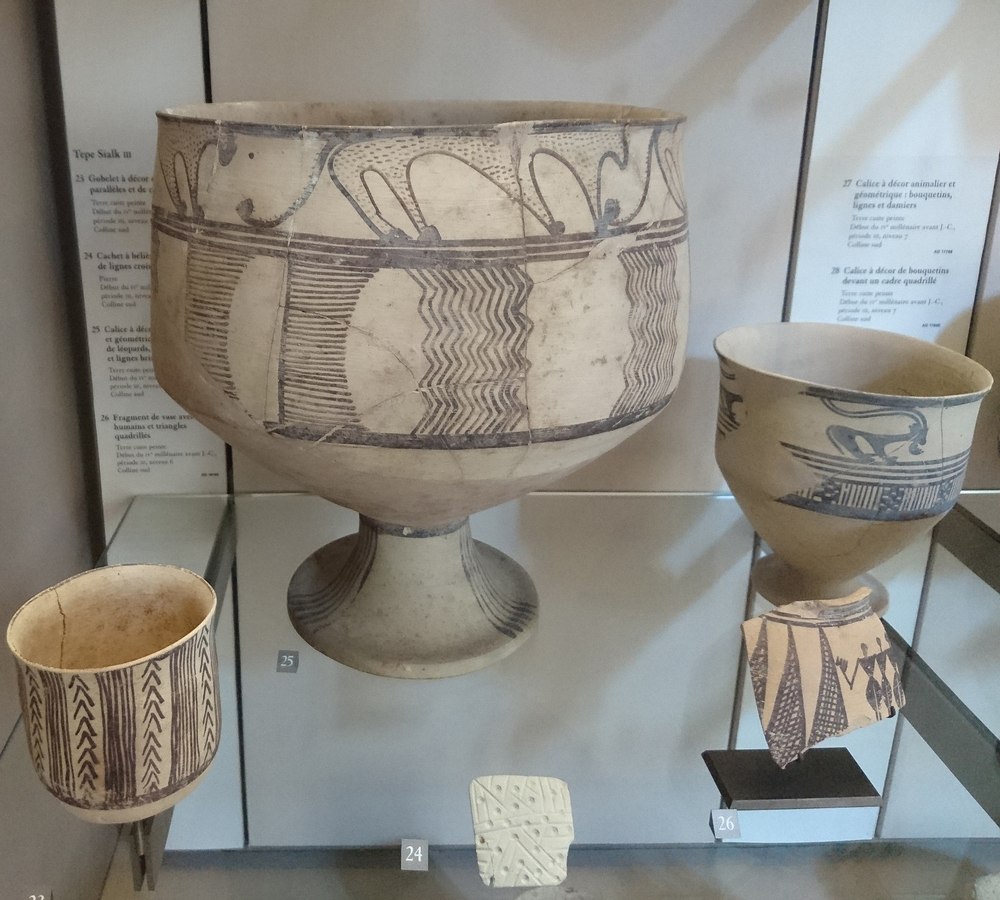
Archaeologists have categorized the artifacts discovered at Tepe Sialk into six cultural periods, ranging from ancient to modern times: Sialk 1 to Sialk 6. The First Period(8000 to 7300 BC): This era marks the beginning of civilization in the region, where inhabitants built houses using basic materials like straw and wood and engaged in hunting for survival. Early agriculture and animal husbandry began to emerge, with people domesticating goats and sheep, as well as planting wheat and barley. Handmade pottery with simple designs also originated during this time. Some notable artifacts from this period include stone tools for hunting, handmade pottery, necklace beads, stone grinders for grinding grains, and clay sickles for farming. The Second Period(7200 to 6700 BC): In this phase, people took significant steps towards urbanization by establishing small villages. They constructed homes using handmade bricks, promoting settled community life. Pottery became more refined, and agricultural practices and animal husbandry advanced. This overview of Sialk Hill illustrates its profound historical significance and the remarkable trajectory of human civilization that unfolded over millennia. Third Period: The third period was a turning point in the Silk Road civilization and is said to have occurred between 6300 and 5400 years ago. Until this time, people had been living in the northern hill, and during this period they moved to the southern hill to have a larger space to form a community. They built more advanced houses with niches, stoves, and rooms to take another step forward in building civilization. They invented the potter's wheel so that they could make finer pottery with more beautiful designs. With the discovery and extraction of copper, they also produced metal tools and even exported them to Mesopotamia. With the advancement in industry, trade and commerce also became popular among people. You can see evidence of these trades in the commodity registers or tokens discovered in the Sialk Road of Kashan. These tokens are made of clay, stone, bone, and pottery in various geometric and animal shapes. Among the various artifacts discovered from the ancient Sialk Hill and related to the third period, we can mention pottery pieces with more advanced animal, human and plant motifs, pieces left over from metal smelting and tool making, decorative beads and commodity tokens for economic transactions. Fourth Period: The fourth period dates back to a time between 5300 and 4900 years ago. In the fourth period, living conditions and prosperity of the people improved; as a result, the population and economy of Sialk Hill expanded. Following the expansion of the community, local rulers took over the administration of affairs. Archaeologists also discovered linear tablets in the ancient Sialk Hill, which indicate commercial and political relations with people from other regions. Since the written tablets were invented in the present-day Khuzestan and Fars regions, and their discovery in the central plateau of Iran shows how far the Sialk people's communications had spread. Among the discoveries of this period that will attract your attention are the pottery bowls with flared rims. These bowls were not discovered only in the Silk Hill of Kashan and are widely distributed geographically. The people of that time used flared rim bowls to bake bread, as vessels for offering offerings to temples, preparing dairy products, and distributing food rations to temple employees. Other discoveries from the fourth period include clay tablets, cylindrical seals, and personal jewelry. The fifth period: Apparently, at the end of the fourth period, due to environmental problems such as drought, people left the area. The fifth period dates back to 3,600 to 3,000 years ago when new people used the Sialk Hills for settlement. Girishman believed that the gray pottery discovered from the Sialk Hill of Kashan is a sign of the arrival of the Aryans to this area. Among the discovered works from the fifth period, we can mention Cemetery A, located 100 meters southwest of the Sialk site. 15 graves from this cemetery were excavated by archaeologists. The objects found from the fifth period include gray pottery and lids, and fragments of pottery with goat and sheep designs; but unfortunately, the objects buried in these graves were stolen and sold before the excavation. The sixth period: The last period of settlement in the Sialk Hill of Kashan dates back to between 3000 and 2700 years ago. After this period, Sialk Hill was uninhabited and gradually forgotten. After a period when people focused more on the practical aspect of pottery, the tradition of making decorated pottery was revived in this period. Pottery vessels with special shapes and Aryan motifs such as warriors and winged horses belong to this period. Painted pottery pieces, metal ornaments such as bracelets, armbands, and brooches, teapots with long, beak-shaped pipes, decorative handles in the shape of animal heads, needles, and arrowheads are some of the objects discovered from the sixth period.
sightseeing near Sialk Hills
you can visit Borujerdi House in Kashan, that is 5.6 Km away from Sialk Hills.
I want to visit
Sialk Archeological Hills






Sialk Archeological Hills
Visitor Information
- Opening Hours:
- Monday: 09:00 – 16:00
- Tuesday: 09:00 – 16:00
- Wednesday: 09:00 – 16:00
- Thursday: 09:00 – 16:00
- Friday: 09:00 – 16:00
- Saturday: 09:00 – 16:00
- Sunday: 09:00 – 16:00
- City: Kashan
- Address: Amir Kabir Street, Amir al-Momenin Street, end of Zolfaqar 10th, Silk Cultural Heritage Base
- Postal code: 8715977791
- Phone number: +98913361066
- Is open to public visitors: Yes